As a healthcare provider, you may often grapple with how to manage an overwhelming amount of patient data while ensuring accurate diagnoses and delivering timely care in remote or underserved areas.
Meanwhile, you’re getting more patients with chronic conditions such as heart disease, cancer, and diabetes. Statistics reveal that cardiovascular diseases alone cause the deaths of nearly 805,000 people in the US each year. Many of these could be prevented with the help of Artificial Intelligence (AI) in telemedicine. AI simplifies diagnostics, spot health risks before they become serious, and help keep patient data secure.
So, ignoring AI in telemedicine isn’t an option anymore. In this article, we’ll explore what benefits AI telehealth provides, how it can offer tailored treatment plans, and why it improves patient outcomes.
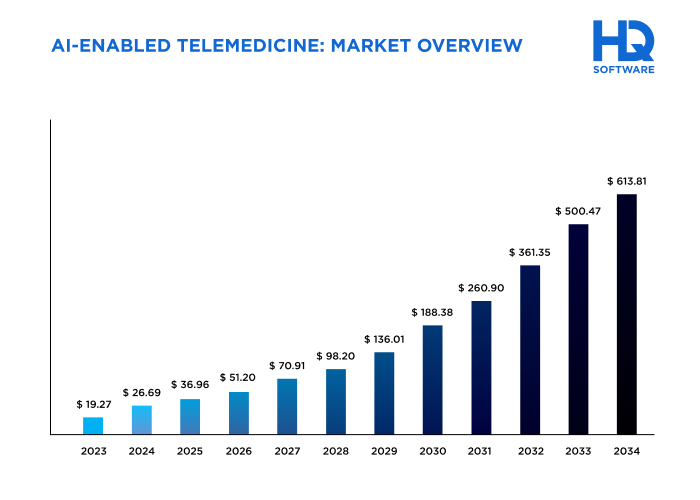
With increasing accessibility, expanding cloud platforms, AI-driven APIs, and advanced telehealth devices, the telemedicine market is experiencing rapid growth. By 2033, it is projected to reach around $869.22 billion. The broader AI healthcare market, which powers much of the current innovation in telemedicine, is also expected to soar from $19.27 billion in 2023 to nearly $613.81 billion by 2034.
What happens when AI and telemedicine converge? AI-enabled telemedicine.
This approach uses AI technologies such as Machine Learning (ML), natural language processing (NLP), and computer vision to analyze patient data, provide diagnostic support, and streamline clinical workflows.
These numbers demonstrate the significant potential and rising demand for AI in telemedicine. The reasons are clear. Healthcare providers need:
Personalized medicine. AI helps tailor treatment plans based on patients’ health history, genetic data, and lifestyle factors.
Predictive analytics. AI algorithms can predict individual disease courses and identify high-risk patients, allowing for proactive interventions.
Virtual assistants. AI-powered chatbots streamline patient communication, manage appointments, and provide basic health advice.
Remote monitoring. AI-enabled devices can continuously monitor patients remotely and send alerts to healthcare providers when necessary.
The impact is evident: about 89% of healthcare organizations are either already using AI or planning to implement it, according to a survey by Healthcare IT News. So what are the main benefits?
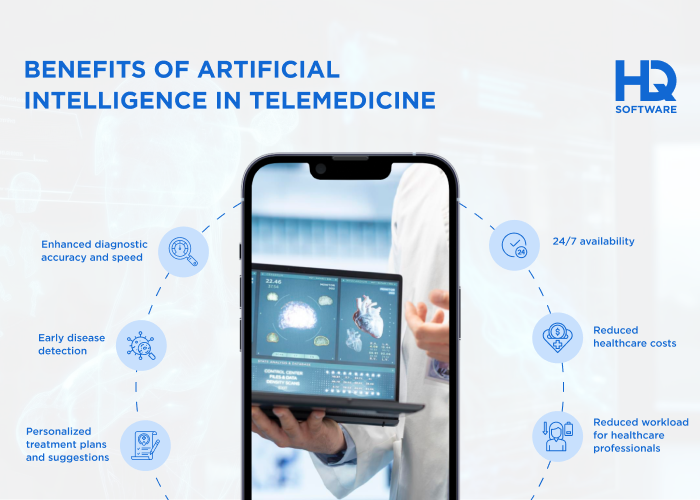
Benefits of Artificial Intelligence in Telemedicine
AI’s influence on healthcare software development goes much beyond accelerating data analysis. In fact, it’s driving some changes with profound impact.
Enhanced diagnostic accuracy and speed
Based on initial input, an AI triage system can ask a series of questions similar to those a doctor would use, focused on key factors such as symptom severity, duration, triggers, and related symptoms. After 10 to 20 questions, the AI gathers enough information to make a reliable triage recommendation.
Early disease detection
AI can help detect diseases at an early stage by analyzing symptoms and medical data. AI can also help by continuously monitoring patients’ vital signs through IoT devices and other health data, quickly alerting healthcare providers to any changes or potential issues.
Reduced healthcare costs
By integrating AI into telemedicine, you can experience significant cost savings through smarter, more efficient care tailored to your needs. With streamlined processes and improved resource allocation, AI-driven telemedicine ensures better healthcare outcomes at a lower cost. So you can make quality medical services more accessible to a larger population.
Personalized treatment plans and suggestions
AI tools gather basic details such as demographic information and risk factors, followed by symptom-specific questions. These tools can serve all ages, from newborns through adults, ensuring inclusive support across every life stage. The system can then generate a results page with suggested next steps, which may include self-care tips, a referral to a healthcare provider, or guidance for urgent or emergency care. It also advises on the best consultation method, whether in-person or virtual.
Need a custom software solution? We’re ready to help!
Hymux Technologies has a team of skilled professionals ready to tackle the project. Ask me!
AI-powered chatbots and virtual assistants can provide medical advice and answer patient queries round the clock. This way, patients always have access to healthcare information.
Reduced workload for healthcare professionals
AI can automate routine tasks such as scheduling appointments, sending reminders, and monitoring patient health. Just imagine the relief for busy clinics and hospitals! This kind of automation is not just about efficiency. It’s about alleviating the mounting pressure on healthcare workers, potentially reducing burnout and fostering a more sustainable work experience.
So, Artificial Intelligence clearly offers big benefits to telemedicine, and we’re still discovering all the ways it can improve the field. But for a better picture, let’s look at some ways healthcare providers are currently using AI in their work.
Before we explore the real applications of AI in telehealth, watch our quick video about our healthcare app development services.
Applications of AI in Telehealth
Chatbots and virtual assistants
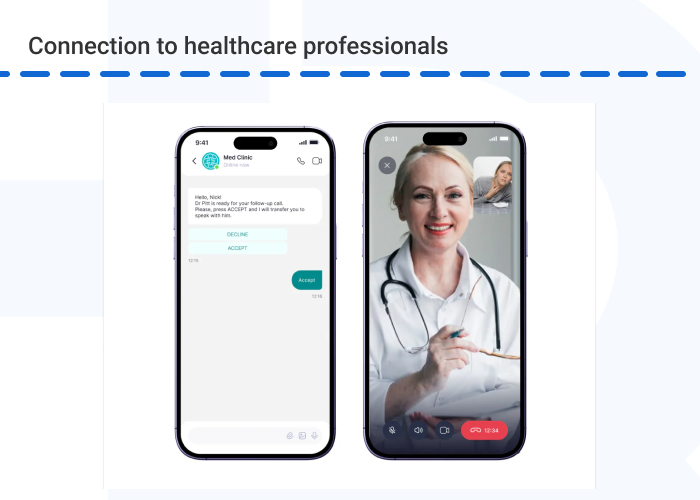
Virtual health assistants and chatbots are one of the most common AI tools in telehealth. These solutions can give advice, answer questions, and schedule appointments with a friendly, human-like approach so patients feel like they’re talking to a person.
Virtual assistants can answer questions like “Is this rash something urgent?” or “When is my next checkup scheduled?” This support is available 24/7. It guarantees that patients receive immediate reassurance and critical information at any moment, addressing anxieties promptly and consistently.
Example: At Hymux Technologies, we created a customized AI-powered chatbot that seamlessly integrates with the client clinic’s existing systems. The AI chatbot’s capabilities include:
Appointment management: scheduling, rescheduling, and reminders.
Patient onboarding: streamlining the registration process and reducing paperwork.
General inquiries: providing immediate answers to frequently asked questions.
Because it’s available 24/7, the chatbot provides patients with instant support, reducing wait times and alleviating the workload on the clinic’s staff.
AI-assisted diagnostics
AI can sift through massive datasets, from medical images to lab results, and spot patterns or anomalies that might slip past even the most experienced clinicians. Its impact is especially profound in radiology and pathology, where AI algorithms can analyze X-rays, MRIs, and CT scans with remarkable precision. This ability enables accurate remote diagnoses and ensures patients receive timely care, no matter where they are.
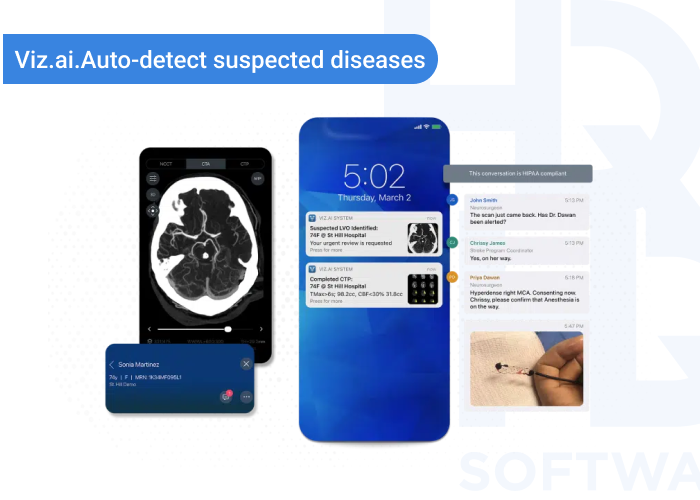
Example: Viz.ai can rapidly detect signs of a stroke in CT scans. By analyzing the images in real time, the software can quickly alert the healthcare team to potential strokes. Every minute counts in stroke care, and Viz.ai’s timely alerts can make all the difference, potentially saving lives and minimizing the risk of long-term disability.
Remote patient monitoring and management
Caring for patients who require ongoing monitoring can be a challenge, especially when they’re physically far away. However, AI-powered remote patient monitoring solutions make it easier for doctors to stay on top of their care. Here Machine Learning algorithms analyze data from wearable devices, mobile apps, and other sources. Then doctors can identify potential issues before they become serious, adjust treatment plans as needed, and provide more proactive care.
Example: The KardiaMobile app is a portable ECG device that lets patients take control of their heart health anywhere, anytime. By analyzing ECG readings with AI, the app can detect irregular heart rhythms like atrial fibrillation and instantly alert both the patient and their healthcare provider if something’s amiss.
Personalized medicine and treatment plans
Every patient is unique, with their own distinct characteristics, medical history, and lifestyle. In telehealth, by leveraging AI-driven insights, you can develop personalized treatment plans that take into account a patient’s genetic makeup, medical history, and environmental factors. AI can also predict how patients will respond to specific treatments, allowing for more tailored and effective care. An individualized approach like this leads to much better outcomes.
Example: One of the leading telehealth providers, Teladoc Health, has successfully implemented AI-powered solution Virtual Sitter in their platform. By analyzing patient data, including genetic information, medical history, and lifestyle factors, their AI algorithm can identify high-risk patients and predict the likelihood of disease progression.
Mental health support
Mental health is just as important as physical health, and AI can play a vital role in supporting patients’ emotional well-being. Virtual therapists can provide stigma-free support for patients struggling with anxiety, depression, or other mental health concerns. By offering a non-judgmental space for patients to share their feelings and concerns, you can help them build resilience, manage symptoms, and improve their overall mental health.
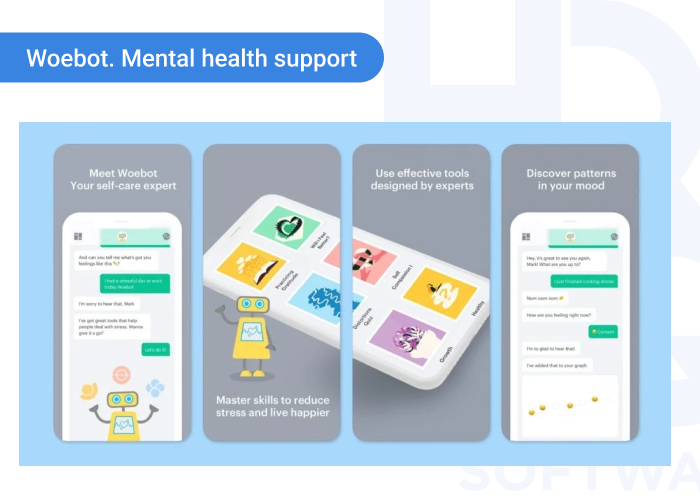
Example: Woebot, an AI-driven mental health chatbot that uses NLP to offer cognitive behavioral therapy (CBT) techniques. Woebot engages users in conversations that help them identify and challenge negative thought patterns, develop coping strategies, and practice mindfulness. Users can interact with Woebot at any time, providing immediate support and reducing the stigma often associated with seeking help from a human therapist.
As you can see, the integration of AI into telehealth holds incredible promise for improving how we access and receive care.
However, while there are a lot of possibilities, it’s crucial to turn our attention to complexities involved in implementing these technologies.
Challenges of AI-Powered Telemedicine
Here we’d like to highlight three main challenges that need to be addressed. With our experience in AI software development, we believe these issues are key to successfully using AI in telemedicine.
Challenge 1. Data privacy and security
One of the foremost challenges in AI-powered telemedicine is ensuring the privacy and security of patient data. With the vast amount of sensitive information being transmitted and stored, the risk of data breaches and unauthorized access is significant.
To mitigate this, we at Hymux Technologies implement robust encryption protocols and adhere to stringent compliance standards like HIPAA (the Health Insurance Portability and Accountability Act). Additionally, regular security audits and staff training on data protection protocols can help maintain a secure environment, ensuring that patient trust is preserved.
Challenge 2. Data quality and integration
Another challenge is ensuring the quality and integration of data from various sources. Poor data quality can lead to inaccurate diagnoses, delayed treatments, and compromised patient outcomes.
To overcome this challenge, we believe it’s essential to establish robust data governance policies and implement data validation checks to ensure accuracy and consistency. Additionally, using standardized data formats and APIs can facilitate seamless integration with existing electronic health records (EHRs) and other healthcare systems.
Challenge 3. Integration of AI with the existing systems
The last, crucial challenge is to integrate AI-powered tools with existing healthcare systems. Many clinics and hospitals have legacy systems that may not be compatible with new AI technologies.
To address this, we can offer a phased approach. This involves starting with a pilot program to test the compatibility and effectiveness of the AI tool within the existing system. Based on the outcomes, we can make adjustments before a full-scale rollout. This will ensure that the AI technology enhances rather than disrupts current operations.
With a clear understanding of the challenges at hand, let’s now explore the practical steps involved in implementing AI in telehealth solutions.
Considering custom software?
Hymux Technologies’s team of experts can design and develop the perfect solution for your business. Let’s discuss it
How Hymux Technologies Can Help With AI Integration in Telemedicine
Hymux Technologies brings extensive experience in developing AI-driven solutions. Our goal is to create AI solutions that are tailored to your unique requirements and help you achieve better patient outcomes.
Here is how we can help with AI integration in telemedicine:
Custom AI solution development: As a team of experienced AI developers, we can help you design and build custom AI solutions that meet your telemedicine needs.
AI strategy and consulting. We understand that integrating AI into your telemedicine platform can be a daunting task. This is why we offer AI strategy and consulting services to help you navigate the process. Our team will work closely with you to identify areas where AI can add the most value, develop a roadmap for implementation, and provide guidance on how to overcome common challenges.
Integration with existing systems. Integrating AI solutions with your existing telemedicine platform can be complicated, so we offer expert integration services to ensure a seamless transition. Our team will work with you to integrate AI-powered tools with your EHRs, patient engagement platforms, and other healthcare systems.
Regulatory compliance and security. We prioritize these aspects in our AI development and integration services. Our team will work with you to ensure that your AI-powered telemedicine solutions meet all relevant regulatory requirements and adhere to the highest security standards.
Alright, so now you’re ready to dive into the ‘how-to’ of bringing AI into your telehealth offerings? It’s an exciting step, and with our structured approach, you’ll get a clear understanding.
How To Implement AI in Telehealth Solutions
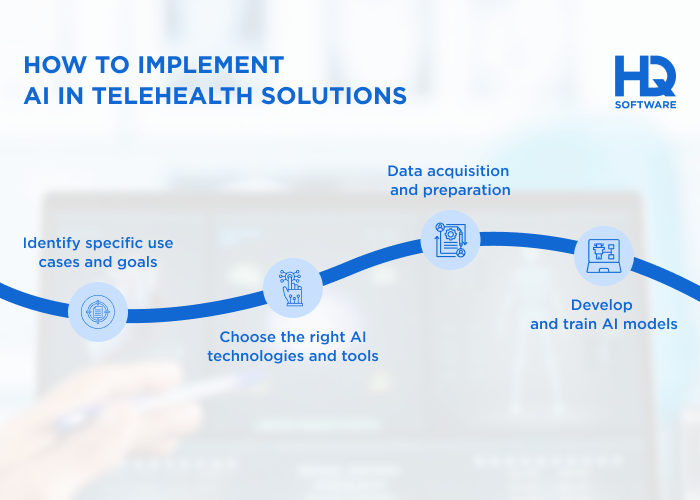
Here’s a breakdown of the key steps we follow at Hymux Technologies:
1. Identify specific use cases and goals. Before implementing AI, think about exactly where and how it can add the most value to your telehealth services. Are you looking to improve diagnostics, personalize treatment plans, enhance patient engagement, or streamline administrative tasks? Clearly defining your objectives will guide your entire implementation strategy.
2. Data acquisition and preparation. Recognize that high-quality, relevant data is the lifeblood of any successful AI implementation. You’ll need to ensure you have access to the necessary patient data while strictly adhering to privacy regulations like HIPAA. Then we’ll clean it and structure it in a way that AI algorithms can effectively learn from.
3. Choose the right AI technologies and tools. Based on your identified use cases, we select the appropriate AI technologies. This could range from ML algorithms for predictive analytics to natural language processing for chatbots, or computer vision for image analysis. Consider whether to build custom solutions or incorporate new AI functions to some of your existing platforms.
4. Develop and train AI models. If you’re building custom solutions, this stage involves developing, training, and validating your AI models using the prepared data. Seamless integration is key for user adoption and efficiency. Plan how the AI tools will fit into your current EHR systems, patient portals, and communication platforms, ensuring a smooth experience for both providers and patients.
As we conclude our exploration of AI in telemedicine, it’s clear that this technology has the potential to impact the way we deliver healthcare. From enhancing patient care through personalized treatment plans to streamlining administrative tasks, the use cases of AI in telemedicine are vast and promising.
We believe that AI-powered telemedicine is an exciting and rapidly evolving field that holds tremendous promise. By embracing this technology and working together to overcome its challenges, we can create a brighter future for healthcare. One that’s more personalized, more accessible, and more effective for all.
Contact us to know more about our healthcare development services.
To ensure the outstanding quality of Hymux Technologies’s solutions and services, I took the position of Head of Production and manager of the Quality Assurance department. Turn to me with any questions regarding our tech expertise.
We are open to seeing your business needs and determining the best solution. Complete this form, and receive a free personalized proposal from your dedicated manager.