Table of contents:
What Are the Key Types of Telemedicine?
Examples of Telemedicine Solutions by Hymux Technologies

How often do distance, mobility issues, or packed schedules prevent your patients from accessing the timely care they need? As a healthcare provider, you know these barriers can significantly impact treatment outcomes.
We know the most efficient way to mitigate these issues: telehealth. But “telemedicine” isn’t a single entity. Effective remote care relies on using the right approach for the specific situation.
So, to best serve diverse patient needs, it’s important to understand the different types of telehealth services available. Let’s explore some options that may help you find successful solutions for your medical practice.
What Are the Key Types of Telemedicine?
Examples of Telemedicine Solutions by Hymux Technologies
Telemedicine is a powerful tool that helps you provide clinical care, consultations, and patient monitoring that effectively bridges the distance between patient and care provider. Keep in mind that a one-size-fits-all approach won’t work, as different medical services necessitate specialized types of telehealth. These distinct forms include:
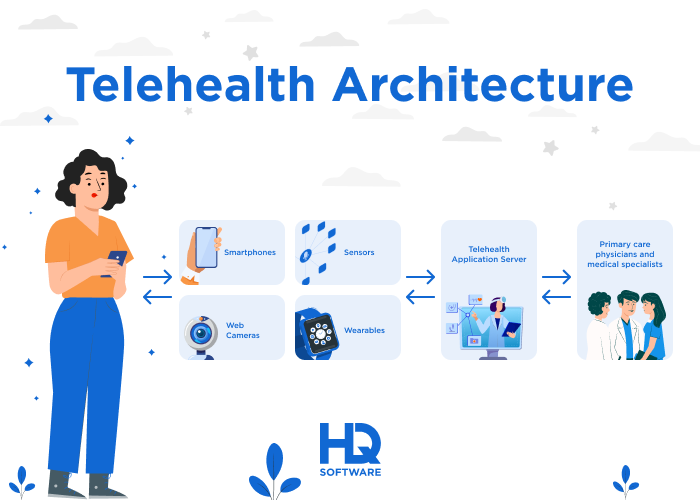
The most recognized form of telehealth is live video conferencing, two-way video consultation between a patient and their healthcare provider. This method has been widely adopted by professionals, from hospital physicians to private practices.
Live video conferencing reduces travel time and stress for both parties and extends healthcare reach to areas with limited medical options compared to urban regions.
Store-and-forward telemedicine reduces the need for in-person meetings between medical practitioners and patients. Instead, patient data such as medical images or biosignals can be sent to specialists as needed. This practice is especially prevalent in dermatology, radiology, and pathology.
With proper organization and care, store-and-forward telemedicine can simplify the treatment approach. However, it relies on documented information or images rather than physical examinations, which has the potential to lead to misdiagnosis and other issues.
Remote monitoring, or self-monitoring/self-testing, involves using Internet of Things (IoT) tech devices to monitor a patient’s health and clinical signs remotely. This technique is extensively used in managing chronic conditions such as cardiovascular disease, diabetes mellitus, and asthma.
While there’s a potential risk of inaccuracies in patient-performed tests, the outcomes usually match those of professional tests. RPM offers cost-effective, more frequent monitoring and leads to better patient satisfaction.
Thanks to the rise of smartphones, mobile health apps have made it easier than ever to track fitness, medication schedules, and even consult doctors via chat. These apps empower people to take charge of their health, reminding them to stay active or take their meds on time.
MHealth employs smartphones and tablets, coupled with dedicated health applications, to actively engage patients in their own care. These tools collect vital health data, including blood glucose and behavior patterns, that can integrate with EHRs for a complete patient view and proactive care.
Overall, different types of telemedicine offer practical solutions for a wide range of medical needs. But telemedicine’s effectiveness becomes clearest when you see it in action. To demonstrate this, we’ve highlighted three real-world telemedicine solutions developed by Hymux Technologies.
Need a custom software solution? We’re ready to help!Hymux Technologies has a team of skilled professionals ready to tackle the project. Ask me!
Victoria Rokash
Business Development Manager
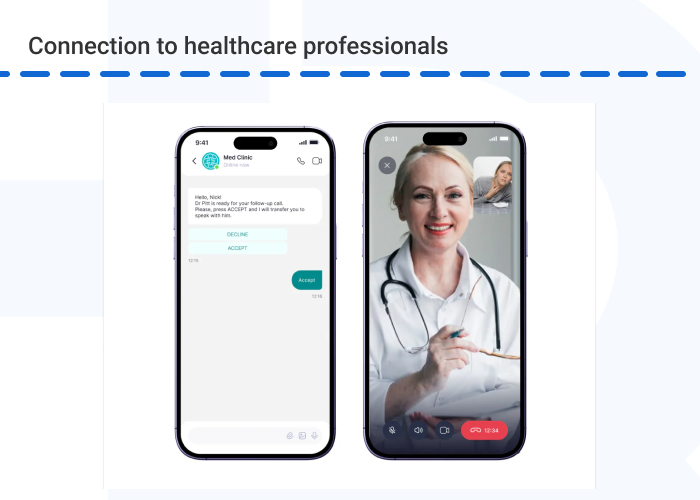
At Hymux Technologies, we created an AI-powered chatbot that seamlessly integrates with a clinic’s existing systems to automate routine tasks, for example, appointment booking, patient onboarding, and handling general inquiries. Designed for 24/7 availability, the app provides patients with immediate support while alleviating the clinic staff’s workload.
Here’s what the application does:
Results:
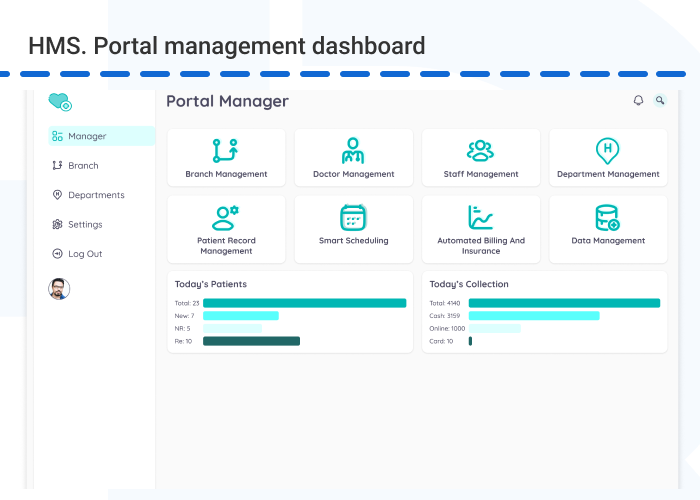
By partnering with Hymux Technologies, a clinic adopted a comprehensive hospital management platform to streamline administrative tasks that were once done manually. This platform’s main goal is to digitally manage clinical, financial, and operational data across different departments.
The system has several important telemedicine functions:
Results:
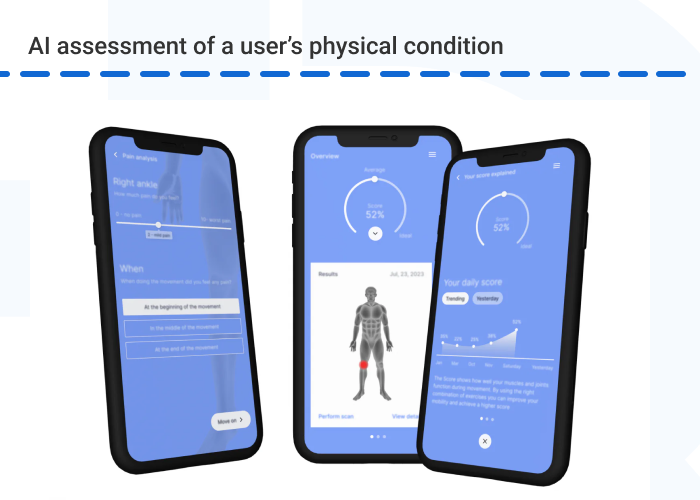
This mobile app uses AI-powered body-movement analysis to identify functional disorders. It uses a functional movement test to evaluate various postures and movements while the user performs specific exercises, automatically detecting potential issues across different body systems.
The app has three main telemedicine uses:
Results:
Explore our portfolio for even more healthcare examples!
Seeing specific examples like those developed with Hymux Technologies highlights what’s possible with telemedicine technology. To better integrate these capabilities into your own practice, let’s consider the core types of telehealth services.
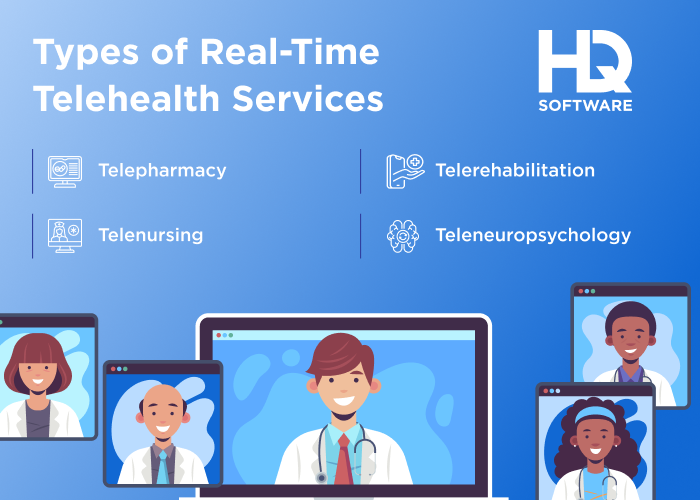
When patients can’t see a pharmacist in person, telepharmacy offers a way to receive pharmaceutical advice remotely. But telepharmacy goes beyond simply refilling prescriptions. Via secure video conferencing pharmacists can:
Telepharmacy is especially valuable for patients in rural areas with limited access to pharmacy services, for those with complex medication regimens, and those who would benefit from more frequent check-ins.
All healthcare providers know the importance of consistent monitoring and patient education. However, it’s not always possible when patients are not present in a hospital.
Through real-time video and phone consultations, telenursing allows healthcare providers to:
By dealing with minor issues, for instance infections or allergies, early on, telenursing reduces unnecessary hospital visits and overcrowding. This means patients get timely advice on managing symptoms at home or knowing when to seek urgent in-person care.
Considering custom software?Hymux Technologies’s team of experts can design and develop the perfect solution for your business. Let’s discuss it
Dmitry Tihonovich
Business Development Manager
For physical, occupational, and speech therapists, telerehabilitation opens up exciting possibilities for these professionals to:
This can be highly beneficial for patients facing mobility challenges, those recovering from stroke, or individuals needing ongoing therapy after orthopedic surgery. Physicians can utilize video conferences to observe clinical progress and get feedback, ensuring exercises are performed correctly and safely. Beyond convenience, telerehabilitation can improve adherence to therapy regimens and even offer specialized services that might not be locally available.
This kind of telemedicine allows neuropsychological consultations to be conducted over the phone with patients who have or are suspected of having cognitive disorders. Here video technology facilitates the use of standard evaluation techniques.
With teleneuropsychology you can:
Teleneuropsychology is a growing area with significant potential. While requiring specialized training and careful consideration of assessment validity, it allows you to reach patients who may have difficulty accessing in-person evaluations. Specifically, for those with mobility limitations or with significant cognitive impairments that make travel challenging.
To get a better sense of telemedicine software development processes, watch our brief video.
When you’re ready to bring telehealth to your practice, you’ll want to consider which approach best fits your workflow and patient needs. Below are two popular configurations you can explore.
If you prefer to keep it simple at first, stand-alone telehealth platforms can be your quickest route to a remote care model. They usually function as separate apps or software that let you schedule virtual visits, send appointment reminders, and conduct video consultations.
This route gives you maximum flexibility, especially if your practice doesn’t currently use an EHR system. While you may need to manually upload files or data, stand-alone solutions often excel at rapid deployment and straightforward training.
For a more seamless experience, EHR-integrated telehealth apps could be your best bet. By merging virtual appointments, medical records, and billing information into a single platform, you’ll minimize administrative tasks and create a unified workflow.
Once set up, patient data is automatically updated across the system, so there’s no need to juggle multiple tools. This approach helps ensure that vital patient information such as lab results, treatment plans, and prescriptions, flows effortlessly between in-person and telehealth appointments.
At Hymux Technologies, we specialize in delivering both stand-alone and EHR-integrated telehealth solutions to match your practice’s unique needs. We’ll work closely with you to identify the best approach, whether you prefer a swift transition to remote care or aim for a completely unified patient experience.
Our team can help you with the following software development services:
Additionally, we prioritize HIPAA and GDPR compliance to guarantee that patient data remains safe and confidential at every step. So, whether you’re just exploring remote care options or are ready to expand your telehealth capabilities, Hymux Technologies is here to support you in delivering high-quality healthcare to your patients.
Contact us to know more about our telehealth development services.

Head of Production
To ensure the outstanding quality of Hymux Technologies’s solutions and services, I took the position of Head of Production and manager of the Quality Assurance department. Turn to me with any questions regarding our tech expertise.


Subscribe for more!
We are open to seeing your business needs and determining the best solution. Complete this form, and receive a free personalized proposal from your dedicated manager.

Sergei Vardomatski
Founder