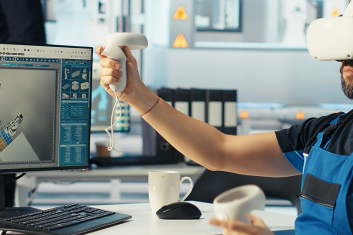
Since 2014, when Facebook acquired Oculus and took a big stake in the VR world, a lot has changed in the immersive industry. Now, VR and AR can be used in almost any industry. Work meetings, training, communication, and a lot of other activities happen in the virtual world.
In 2022, Facebook has become Meta — a company taking a whole new direction toward connecting people in the metaverse, a fully virtual world with endless possibilities. E-commerce has embraced this trend as well, and now we can try on clothes virtually as well as visit virtual stores, e.g. produce section in virtual grocery shops.
The COVID pandemic had the largest impact on the digitalization of shopping experiences — since the whole world was going remote and the concept of the metaverse was becoming extremely popular, why not include supermarkets?
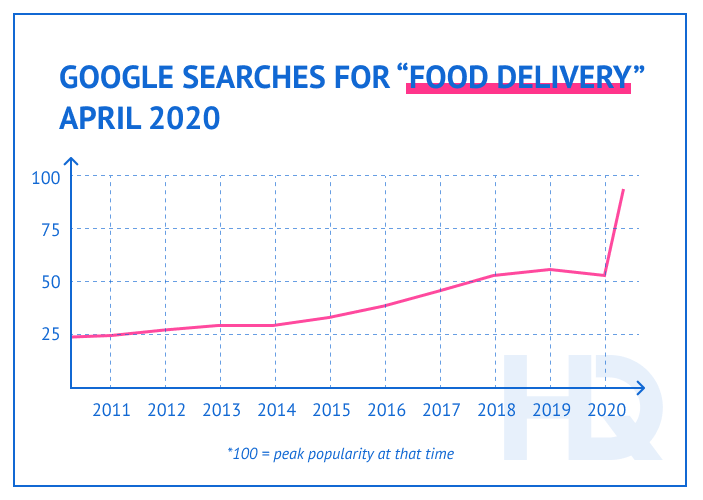
As recently as 2019, 8 of every 10 people never ordered groceries online, according to a Gallup survey. The whole market value was around $1.2 billion.
Our shopping habits have changed. Now we do fewer trips and have more diverse product lists, thanks to a range of delivery opportunities.
All these facts and figures show that the future of grocery shopping is digital, and what’s more important, immersive. Delivery and contactless shopping experiences can be hugely enhanced by Virtual Reality and Augmented Reality.
We’ll find out how, by first taking a look at how these technologies work from the standpoint of AR/VR developer.
Curious how virtual shopping transforms retail?
Explore Hymux Technologies’s AR/VR projects to see how immersive shopping experiences are reshaping customer engagement and driving measurable results.
How the process works is slightly different for VR and AR technologies, so we will review them separately.
VR grocery shopping
Virtual Reality allows users to dive into a 3D virtual world that fully replaces the real-world image.
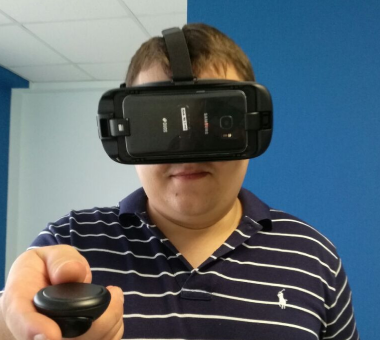
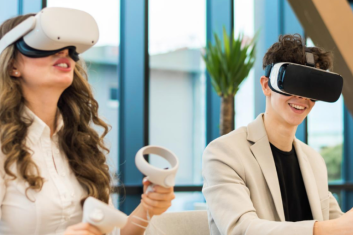
The user dons a VR headset and enters a virtual shop that shoppers can stroll through, just as if they were inside an actual shop.
The shop is virtually recreated for the VR experience so that it looks and feels just like a real grocery store, or even better.
The whole process imitates real-world grocery shopping, except for the fact that the user remains at home and need not waste time driving to a local brick-and-mortar store, waiting in line to pay for the groceries, and so on. It’s traditional shopping taken to a new level of comfort and safety.
AR grocery shopping
With AR, the shopping experience is not completely virtual. The user still sees the real world, but it is greatly enhanced by immersive visuals provided by the AR experience.
For example, the user can scan new products with the AR app and get extra information on the brand, the composition of the product, and even see related ads.
The whole experience becomes even more futuristic for users who wear AR glasses. All content, be it marker-based, markerless, or location-based experiences, appears automatically right before the users’ eyes. The app receives data and an integrated grocery store layout once the user enters the facility and shows this information to the user through the glasses. There’s no need to reach for your smartphone and scan particular items.
This is just an overview of how Virtual Reality and Augmented Reality work for the online grocery shopping experience in general.
In practice, the possibilities and features that immersive technologies provide for supermarkets are endless. It’s easier to review the details with the help of use cases.
Business Value of AR/VR for an Enhanced Shopping Experience, With Use Cases
Virtual Reality and Augmented Reality technologies bring the following business value:
Improving the customer journey with personalized online shopping. With AR, customers can browse shelves with their smartphone and obtain extra data on every product, e.g. calorie values, information about allergens, promotions, and so on.
Closing the gap between offline and online shopping. With virtual technologies, businesses can bring all the features of online shopping to offline shoppers, with the help of special hardware and apps.
Boosting brand loyalty. AR/VR allows for building better relationships with customers by providing them with one way virtual experiences.
Added value to products. In virtual grocery stores, you no longer simply buy groceries — you engage in interactive experiences.
Insights into customer behavior. Virtual shopping apps are excellent for analyzing customer behavior — they collect data on how users interact with the solution, and the gathered insights help in making better decisions.
Now let’s take a look at how exactly virtual grocery shopping technologies deliver that value.
Personalized shopping experience
There are multiple ways by which AR and VR technologies can redefine the shopping experience, but Dent Reality chose to start from the basics — the shopping list.
Their application allows users to compile their own online shopping list and organize products into groups. Then, the app offers directions in AR about where these products can be found in the store. Once you set up the app for yourself, it can even suggest particular or new products according to your preferences or pre-selected recipes.
Looking to boost customer engagement and sales?
From virtual store layouts to interactive product displays, Hymux Technologies builds tailored solutions that turn ordinary shopping into an immersive, data-driven experience.
Companies are making use of this fact. For example, a Chinese e-commerce grocer created an AR application that lets customers find products they need inside the store. The e-commerce app shows directions in Augmented Reality and requires only a smartphone to take the supermarket shopping experience to the next level.
The unique thing about this is that these stores are completely virtual; they have no physical facilities. This is a revolutionary way to use location-based AR.
Offline experience brought online
Virtual supermarkets are the perfect option for those who love shopping offline but don’t have free time or simply can’t visit a store, for example while ill.
This is what HappyFresh, one of the leading online grocery platforms in Southeast Asia, offers — a virtual grocery shopping experience called Happy Reality.
In the near future, such solutions will be available in Western countries as well.
Customer behavior analysis
When your customers shop using only a cart and a paper grocery list, the business misses out on a lot of potentially useful information. You don’t get to know your customers’ buying habits, can’t predict sales in detail, and don’t have the opportunity to create truly personalized ads that hit the spot.
Virtual grocery shopping will change this forever.
You can collect and analyze data on every step of your customers’ shopping route and boost sales, customer satisfaction, and loyalty in so many ways:
Show relevant ads and provide users with valuable coupons right in the app;
Navigate them to the product that they always buy, to save their time;
Show product replacements beforehand if the desired product is out of stock, so that customers change their shopping list on the go, etc.
All of these features ensure that all parties are satisfied: businesses get more revenue and clients are much happier with their virtual shopping experience.
But if all this is possible, why don’t we see people shopping in Virtual Reality universally? Why isn’t every customer roaming around in the store with a smartphone, scanning products and seeing interactive data in AR?
That’s because limitations remain that inhibit extensive adoption of these technologies. Let’s look more closely at those.
Challenges of AR/VR Adoption for Supermarkets and Grocery Shops
Certain challenges have kept AR and VR technologies from being more widely adopted in retail and grocery shopping in particular.
Price of development and deployment
Not every business is ready to devote a huge budget to immersive tech, and they prefer sticking to traditional shopping experiences.
From the consumer side, visiting a virtual shop is possible only if they have a suitable headset or at least a modern smartphone to scan for AR content.
Tech skepticism
People are really skeptical about whether they need another sphere of their lives digitized. Of course, they love using smartphones and working on laptops, but sometimes it becomes just too overwhelming and people prefer to take a break from the digital world and connect with the real one.
How can you bring your supermarket into the virtual world?
Hymux Technologies creates immersive AR/VR shopping experiences that let customers explore products, navigate stores, and engage with your brand.
Most of the devices available on the market can’t provide users with an adequate experience due to technical limitations.
People still feel dizzy after spending time in a VR helmet, advanced AR experiences require appropriate hardware in smartphones, and AR glasses are still developing toward the goal of imitating regular glasses in terms of weight and look.
Though these challenges seem serious and hard to overcome, time and technological progress may overcome them eventually.
It is inevitable that in the future we will be more integrated into virtual experiences, even in such routine tasks as grocery shopping, and all hardware and devices that we use will become sleeker, more lightweight, easier to use, and will provide an outstanding experience in terms of image quality and resolution.
5 Reasons to Implement AR in Media and Entertainment
How do modern businesses use AR to increase their revenues and outperform their industry competitors?
Now, let’s find out how much it typically costs to develop e-grocery experiences and AR/VR solutions.
What Does It Cost to Build an AR/VR Grocery Shopping App?
It depends on various factors that affect the price of an immersive app.
App complexity
The more features you want in your app, the more developers’ time it will take to build. The average rate of an AR/VR developer is somewhere around $35 per hour, depending on the location and level of experience, so take this number into account.
Development team composition
Typically, an AR/VR project requires employing a team of developers, QAs and testers, business analysts, a project manager, a UX/UI designer, and 3D modelers. A more extensive and large-scale project requires a larger team, which demands a larger budget.
Amount of 3D content
Creating 3D content for an immersive store shopping experience is a whole separate issue — it is expensive and requires time. Often multiple creators are required to work simultaneously on this task.
Now that we know the factors affecting the price, let’s make a rough calculation.
An Augmented Reality grocery shopping experience app that scans markers on products, incorporates a content gallery, and has integration with social media will take around 160 hours to develop.
Let’s add around 100 hours of work in the field of business analysis, testing, design, 3D modeling, and project management combined.
For 260 hours of work, a rough estimate would be $46,000.
Please note that all calculations are extremely approximate. To learn how much it will cost to develop your virtual grocery app, contact us with any details you have.
Will We See More Virtual Stores in The Future?
The forecast is extremely positive, even taking into account all the challenges we have discussed above.
Virtual stores provide more possibilities for grocery shopping than brick-and-mortar stores do. Online grocery shopping in VR or AR is more interactive, provides customers with more information about products and shopping opportunities, and helps businesses establish good relationships with their audience.
What’s more important, the large-caps of retail like Walmart are already planning on building virtual stores that can completely replace physical facilities for some users.
Don’t miss out on this opportunity as well! Contact us if you are looking for a virtual shopping experience, and we will get your project up and running in no time.
MDPI – Publisher of Open Access Journals – Barriers and Facilitators of Online Grocery Services: Perceptions from Rural and Urban Grocery Store Managers https://www.mdpi.com/2072-6643/14/18/3794
A developer with extensive expertise in AR/VR, very ingrained into the topic of Mixed Reality development. Shares his knowledge and the results of many years of work.
How does a virtual supermarket differ from a regular online grocery store?
A virtual supermarket simulates a 3D store environment where users can walk through aisles using Virtual Reality or a 3D interface. In contrast, a regular online grocery store lists items in categories. The virtual supermarket offers a more immersive, lifelike shopping experience similar to visiting a physical store.
What technologies power virtual grocery shopping?
Virtual grocery shopping uses technologies like Virtual Reality (VR), Augmented Reality (AR), 3D modeling, and Artificial Intelligence (AI). These tools create immersive environments, help recommend products, and enable natural interactions. They enhance user experience by making navigation intuitive and product selection easier, just like in a real store.
Is it safe to buy groceries in a virtual environment?
Yes, it’s generally safe if the platform uses secure payment systems and strong data protection. Look for trusted virtual supermarkets with encryption, verified payment gateways, and good reviews. As with any online shopping, avoid sharing unnecessary personal information and always confirm website authenticity.
How do I place an order in a virtual grocery store?
To order, enter the virtual store using a browser or Virtual Reality device, explore aisles, and add items to your virtual cart. You’ll usually need to create an account to check out. After reviewing your list, make a secure payment. You’ll receive an order confirmation along with delivery or pickup details.
Do I need special equipment to shop in a virtual supermarket?
Shopping in a virtual supermarket typically requires only a smartphone, tablet, or computer with a stable internet connection and a web browser or app. No special equipment is needed for most platforms like Amazon Fresh or Instacart. Some advanced VR-based stores might use headsets, but these are uncommon. A payment method like a credit card is also necessary.
Kick Off With Your Project Today
We are open to seeing your business needs and determining the best solution. Complete this form, and receive a free personalized proposal from your dedicated manager.