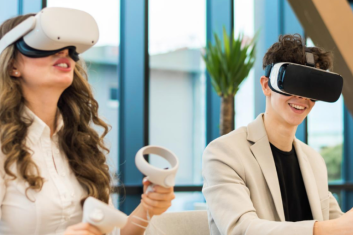
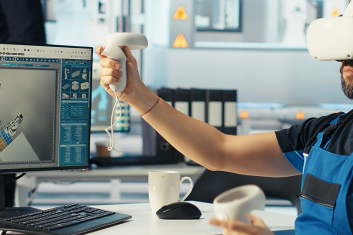
Many companies struggle to provide effective safety training that prepares their teams for the worst. Are your employees truly equipped to handle the unexpected dangers that lurk in your workplace? The truth is, traditional training methods often leave employees underwhelmed and unprepared. What if you could put them into a realistic, interactive world where they can learn to overcome hazards in a completely safe environment?
By using Virtual Reality (VR) software, you can create customized, immersive simulations that transport your employees to front and center in a hazardous situation, ready to face whatever challenges come their way. With a strong background in VR development, I’m passionate about showcasing its potential.
In this article, I’ll walk you through some compelling applications and benefits of using VR for safety training. I’ll demonstrate how VR technology can improve your safety training approach.
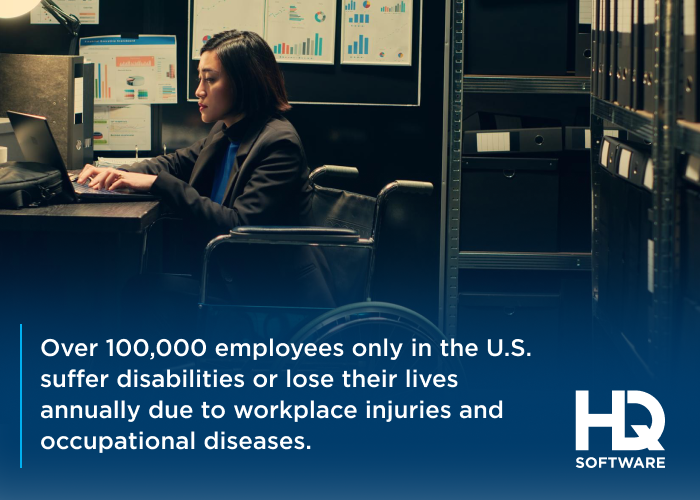
Specializing in AR/VR project development, I’ve noticed an increasing number of requests for VR safety training projects. What’s driving this trend? The answer is clear: over 100,000 employees in the U.S. suffer disabilities or lose their lives annually due to workplace injuries and occupational diseases.
We do have a solution. To minimize risks and foster a strong safety culture, hazardous scenarios can be effectively simulated using Virtual Reality. Moreover, research shows that incorporating VR into the workplace boosts overall safety and aids in risk assessment.
Drawing on my extensive AR/VR project experience, I can confidently say that Virtual Reality can significantly elevate safety training in four key areas. To be precise, these are:
Personal protection equipment measures (PPE). Withinteractive scenarios, employees can practice selecting, fitting, and using protective gear in different workplace settings — for example, chemical labs or construction sites. By practicing how to properly put on and take off complex PPE, trainees learn the risks of incorrect usage and develop muscle memory for safety protocols.
Hazardous environment response. In companies where employees handle dangerous chemicals, operate heavy machinery, or work under extreme conditions, VR simulations can accurately recreate these challenging settings. This system allows employees to develop the skills needed to safely navigate and manage such risks.
Emergency reaction procedures. Through virtual simulations of emergencies such as fires, natural disasters, or security breaches, employees can improve their critical decision-making skills. By experiencing virtual crises they gain a clear understanding of evacuation procedures and learn how to coordinate efficiently with emergency services.
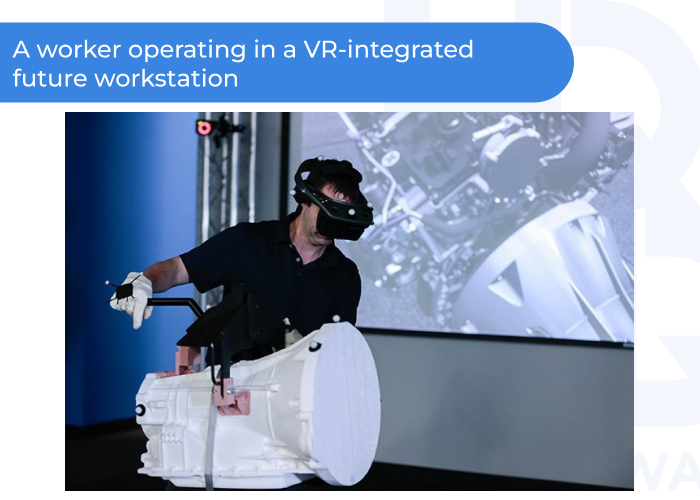
Equipment and machinery operation.VR enables employees to simulate the operation of machinery and navigate potential risks in a safe environment, eliminating the need for physical equipment. This hands-on practice significantly lowers the risk of accidents and equipment damage during real-world operations.
Ford, for instance, has implemented Virtual Reality training to capture and analyze how employees operate machinery during assembly, thereby enhancing safety efforts and reducing accidents by 70%.
Looking for powerful VR safety training software like Ford uses? We at Hymux Technologies, with 22+ years of custom software development, can deliver high-quality, immersive experiences. Watch our video to learn more about our VR development services.
VR Safety Training Services by Hymux Technologies
Here’s how we can collaborate with you to build impactful VR safety training software tailored specifically for your needs:
Custom development consultation. We start by diving deep into your specific safety challenges and training goals to map out the most effective VR solution for your workforce. This ensures the final product addresses the unique risks your employees face.
Tailored VR scenario creation. We design and build immersive, realistic VR training modules specifically for your industry and workplace hazards. These scenarios replicate real-world risks accurately, from intricate equipment operation unique to your setup to high-stakes emergency response protocols relevant to your site.
Platform development and integration. Our team develops robust VR applications compatible with leading headsets and can seamlessly integrate them with your existing learning management systems (LMS) or HR platforms. This minimizes disruption for your administrators and trainees.
Performance analytics and reporting. We incorporate detailed tracking mechanisms to monitor how your employees perform, their completion rates, and the critical decisions they make within the VR scenarios. This data helps you pinpoint specific areas needing further attention or reinforcement for your team.
Deployment and rollout support. We assist you every step of the way, from hardware recommendations suited to your budget and needs to guidance on setup and developing a smooth plan for rolling out VR training to your employees. Our goal is to make the transition to this powerful, immersive learning tool as seamless as possible for your entire organization.
Our support continues well beyond the first rollout. We provide necessary updates and maintenance to ensure your VR safety training remains effective and technically sound. You can rely on us to keep your valuable training investment running smoothly and adapting to your future needs.
Need a custom software solution? We’re ready to help!
Hymux Technologies has a team of skilled professionals ready to tackle the project. Ask me!
Key Benefits of Using VR for Health and Safety Training
Remarkable uptake shows that 39% of companies are already leveraging VR to create immersive training simulations. Let’s explore why this technology is gaining traction and uncover the key advantages it offers.
Realistic learning experience
VR places your employees directly in the scenario, whether it’s navigating a chemical spill, operating heavy machinery, or responding to a fire. Unlike textbooks or videos, this hands-on experience builds muscle memory and confidence, ensuring they know exactly what to do in real emergencies.
Zero-risk environment for high-stakes training
Training for dangerous scenarios like working at heights or confined-space rescues can be terrifying in real life. With VR, your employees can test risky decisions, learn from mistakes, and refine their skills without putting themselves or others in danger.
Customizedscenarios
VR isn’t a one-size-fits-all solution. You can design simulations tailored to your industry’s unique risks, construction sites, healthcare emergencies, oil rigs, or labs. This means your training can be specific to your workplace hazards, ensuring your team is ready for exactly what they might face.
Consistency and standardization
No matter how many people you train, 10 employees or 10,000, or how often, VR ensures every session is identical. Every learner gets the same high-quality guidance, reducing the risk of inconsistent training. This means your company’s safety protocols are universally understood and applied.
Cost and time efficiency
Shipping teams to remote locations for on-site training or renting equipment for simulations? That’s expensive and time-consuming. VR cuts costs by eliminating travel, materials, and maintenance. Plus, employees can train in short, focused sessions, reducing downtime.
Data-driven progress tracking
VR analytics can track everything from reaction times to decision-making patterns. You’ll see where your employees excel or struggle, letting you tailor follow-up training. Imagine knowing exactly which safety protocols need reinforcement or which staff require additional coaching.
Considering custom software?
Hymux Technologies’s team of experts can design and develop the perfect solution for your business. Let’s discuss it
Applications of VR in Safety Training Across Various Industries
Let’s break down how Virtual Reality is making waves in safety training across different industries. I’ve gathered notable global examples and insights from our own VR development experience. For a full collection of our VR projects, please explore our portfolio.
Aviation and automotive
The aviation and transportation industries demand the highest levels of safety, given the complexity of operations and the potential for large-scale consequences. Virtual Reality offers a wide range of training opportunities for personnel in a variety of roles:
pilots can practice emergency procedures in advanced flight simulators;
cabin crew can train emergency landing and falling situations;
maintenance technicians can learn complex aircraft repair tasks in virtual hangars;
airport ground staff can master airport maintenance and emergency situations.
Through occupational training for the aviation and automotive sectors, developed by Hymux Technologies, maintenance technicians have the opportunity to practice operating machinery, diagnosing equipment issues, and adhering to safety protocols. For instance, trainees can repeatedly practice tasks such as inspecting propellers, fixing engine baffles, or cylinder head disassembly and assembly, all in a safe, risk-free VR environment until they master these skills.
This method eliminates the dangers associated with traditional hands-on training. The outcomes have been highly encouraging. The VR training program boasts an 84% engagement rate and a 67% knowledge retention rate.
Manufacturing and warehousing
Hands-on experience within the manufacturing and warehousing industries is crucial for both new hires and experienced workers, because it ensures they are well-prepared to handle real-life situations safely. Just imagine that you can safely train your employees on operating forklifts, handling hazardous materials, or following complex lockout and tagout procedures within a virtual factory or warehouse.
At Hymux Technologies, we’ve developed such VR employee training for a production facility. Through the VR training, line operators can hone their bottling skills and practice adhering to safety protocols on the company’s bottling shop floor. The filling line operator training program has five parts:
PPE training. This first part teaches the basics of using safety gear, such as protective glasses, earplugs, vests, and hard hats;
Video tutorials. These are accessible to trainees on a virtual television inside the immersive VR space.
Practical application. Inside the virtual bottling shop floor, trainees directly interact with the simulated production line and equipment.
Emergency response. This part of the training covers the critical safety protocols for emergency alarm situations.
Skills assessment. To measure the effectiveness of the training, learners undergo an automated digital assessment after the VR module.
The VR solution offers substantial gains: potential annual training cost reductions of up to 73% and a 2.5x decrease in training time.
Construction and engineering
VR is proving to be an invaluable tool for safety training within high-risk construction and engineering sectors as well. For example, it allows you to simulate dangerous scenarios, such as working at heights, operating heavy machinery, or dealing with electrical hazards, in a controlled environment. This immersive training helps workers to better understand and adhere to safety protocols, reducing the likelihood of accidents on site.
For instance, Laing O’Rourke, a leading construction company, uses VR to train its workforce in safety procedures. Employing this immersive experience has resulted in a significant decrease in workplace accidents and an improvement in overall site safety.
Oil, gas and mining
The oil, gas, and mining industries face unique safety challenges:
equipment malfunctions leading to potential disasters,
environmental hazards, including pollution and ecosystem damage,
the constant threat of accidents due to human error,
the unpredictable nature of high-pressure systems and processes.
All this is compounded by the need for rigorous safety training and the management of vast, often isolated, operational areas.
VR provides a safe platform for training workers on how to handle these situations, including emergency response procedures and equipment maintenance. Chevron, for example, uses VR to simulate offshore drilling operations, allowing workers to practice emergency response procedures in a highly realistic setting.
Healthcare
Even in the healthcare sector, safety training software is vital, encompassing everything from infection control to emergency medical procedures. VR provides a unique platform to hone critical skills in a safe and controlled manner. Imagine your medical staff practicing cardiopulmonary resuscitation, responding to patient emergencies such as anaphylactic shock, or mastering intricate surgical procedures in a virtual operating room.
Institutions such as Johns Hopkins Medicine and Cleveland Clinic are exploring VR to train medical professionals in a variety of scenarios, from surgical simulations to crisis management. This protects staff by reducing training risks and encouraging ongoing improvement within the facility.
Moving beyond the impressive applications we’ve already discussed, it’s important to acknowledge that bringing VR safety training to scale isn’t always straightforward. In the next section, I’ll look at some of the key challenges you might face when adopting it.
Challenges of Implementing VR in Safety Training
Challenge 1: Specialized content development
Effective VR safety training software requires a rare combination of safety expertise and VR development skills, making it time-consuming and costly to produce.
Hymux Technologies’s solution: We have a dedicated team of VR developers and safety training experts who collaborate to create customized training modules tailored to the specific needs of your business. We utilize a modular approach to content development, allowing for easy updates and the integration of new safety protocols as they emerge.
Challenge 2: Ensuring realistic training simulations
If the simulations are not convincing or relevant, trainees may not take the training seriously, which can undermine the effectiveness of the program. For example, a construction company might struggle to create VR simulations that accurately mimic the complexities of a real construction site, making it difficult to prepare workers for potential hazards.
Hymux Technologies’s solution: We can help businesses create high-quality, realistic VR training simulations by leveraging our expertise in VR content development and their understanding of industry-specific hazards. We always work closely with our clients to identify specific training needs and develop customized simulations that are both engaging and effective.
Challenge 3: Measuring effectiveness and ensuring adoption
Companies need to be able to assess whether VR training is actually improving safety outcomes and reducing incidents, which can be difficult if they don’t have the right metrics in place. Moreover, some employees might be resistant to using VR technology, which can limit its adoption.
Hymux Technologies’s solution: We can help businesses overcome this challenge by providing analytics and reporting tools that measure the effectiveness of VR training programs. We can also offer guidance on the project aimed at helping you encourage employee adoption and ensure a smooth transition to VR-based training.
The Future of VR in Safety Training
During my career, I’ve watched a steady increase in the adoption of immersive technologies for training, particularly in safety-critical industries such as construction, manufacturing, oil and gas, and healthcare.
The reason is clear. Numerous studies support this:
Research from the University of Maryland’s Virtual Reality Lab shows that companies using VR training experience 45% fewer workplace accidents than those relying on traditional methods.
Overall, by adopting VR for your safety training, you’re investing in a future-ready and safer workplace. Your employees gain confidence, your risks decline, and your organization becomes a leader in innovation and responsibility. Ready to level up your training game?
Contact us to get more information on how we can help develop your next VR training solution.
A developer with extensive expertise in AR/VR, very ingrained into the topic of Mixed Reality development. Shares his knowledge and the results of many years of work.
We are open to seeing your business needs and determining the best solution. Complete this form, and receive a free personalized proposal from your dedicated manager.