Imagine an old woman who used to love gardening but now finds it difficult to move around. Wearing a Virtual Reality (VR) headset, she can suddenly find herself back in her own virtual garden. She can “bend” down to plant seeds and “reach” up to prune roses without the physical strain or risk of falling.
Having spent time with my own grandparents, seeing the challenges they face, I am particularly excited about how immersive technologies can improve their quality of life. As both a passionate VR developer and someone with a personal stake as a grandson, in this post I want to share some tailored insights and discuss emerging trends that underscore the promising future of VR in elder care.
Every three seconds, someone in the world is diagnosed with dementia. But many nursing homes and home health agencies face a critical shortage of certified nursing assistants and trained care staff. Insufficient hands-on training is a leading cause of high turnover, leaving caregivers unprepared for the complex, daily challenges of dementia support. So, how can nursing homes deliver high-quality dementia care amid a growing caregiver crunch? VR solutions can become a key to success.
The VR program on caring for people with dementia that we’ve developed at Hymux Technologies bridges this gap by immersing professionals and family members in the lived experiences of individuals with the disease. The VR experience offers comprehensive training scenarios that simulate the nuances of dementia care, highlighting common challenges and avoidable pitfalls in four critical areas, including:
supporting daily living routines and navigating their unique difficulties;
effectively addressing and managing behavioral expressions;
enhancing mealtime experiences and nutritional care;
fostering meaningful connections through adapted communication techniques.
This innovative approach deepens clinical insight, fosters genuine empathy, and equips teams to provide more quality care.
If you’d like to explore our other VR projects, you can find them in our portfolio.
Health and Wellness Benefits of VR for Seniors
As we age, our physical abilities may decline, making it difficult to engage in regular exercise or even simple movements. Moreover, loneliness and social isolation are common challenges faced by older adults, posing serious health threats. The danger is comparable to smoking 15 cigarettes daily and significantly increases risks for:
dementia (a 50% increase);
heart attacks (a 29% increase);
strokes (a 32% increase).
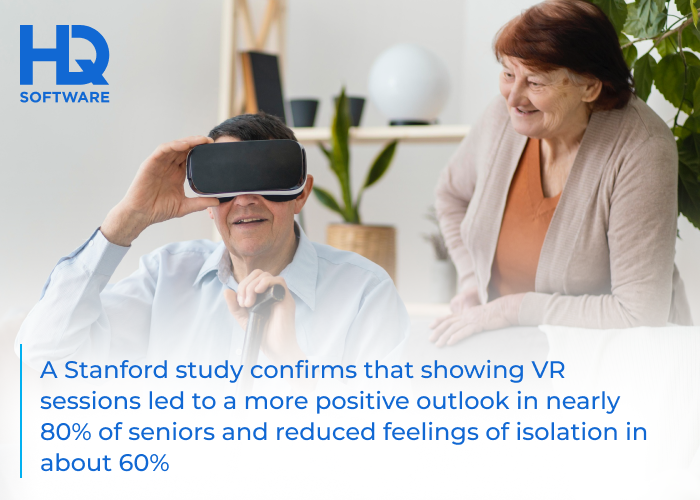
Fortunately, VR is an effective tool to combat these issues in older adults. A Stanford University study with Mynd Immersive confirms this, showing that VR sessions led to a more positive outlook in nearly 80% of seniors and reduced feelings of isolation in about 60%.
1. Physical health
Further evidence of these benefits was shown in a University of Maryland study that found an 8.8% increase in learning retention with VR. Other research indicates that VR for seniors enhances neural connections for sensory, motor, and cognitive skills. These findings confirm Virtual Reality’s value as a tool in care for the elderly. So, let’s look at some common applications.
For seniors, VR can provide:
Low-impact exercise.VR experiences offer gentle physical activities, such as walking, stretching, or dancing. This helps improve flexibility, balance, and strength.
Pain management. Immersive VR experiences have been shown to reduce chronic pain in seniors by distracting them from their discomfort and promoting relaxation.
Rehabilitation.VR can be used as a tool for physical therapy, helping seniors recover from injuries or surgeries by making exercises more engaging and enjoyable.
Improved mobility. VR can help seniors practice balance and coordination in a safe and controlled environment, which can translate to improved mobility in real life.
2. Mental and cognitive health
VR can become a type of mental gym for seniors, offering a safe and stimulating way to exercise their minds and sharpen their cognitive skills. These may include:
Cognitive stimulation. VR stimulates various cognitive functions, such as memory, attention, and problem-solving. You can provide a VR game where seniors have to remember a sequence of objects or navigate a virtual maze.
Memory improvement.VR can recreate familiar environments from the past, triggering memories and sparking conversations. For instance, you can recreate their childhood home or a favorite vacation spot, helping elders reconnect with positive experiences and improve their recall.
Reduced risk of dementia.VR offers a unique and engaging way to provide the kind of stimulation that helps seniors stay mentally active and protect their cognitive health.
Learning new skills. It is never too late to learn. VR provides new skill-building opportunities and keeps the mind sharp.
3. Emotional and social wellness
VR technology has positive impacts on seniors’ emotional and social well-being:
Reduced depression and anxiety. You can provide a calming and relaxing environment in VR. Soothing settings, engaging activities, and social interaction can all contribute to improved emotional well-being.
Social connections.VR facilitates shared experiences among seniors, even if they have limited mobility. They can take virtual tours, attend concerts, or participate in group activities together, fostering a sense of community and belonging.
Emotional therapy.VR can be used as a tool for emotional therapy, to help seniors process and manage emotions related to grief, loss, or trauma.It can also connect seniors with loved ones who live far away. Imagine a virtual family gathering where everyone can interact and share experiences.
Increased sense of purpose.VR experiences can provide seniors with a sense of purpose and engagement. This will improve their overall mood. Successfully completing a virtual task or achieving a goal in a VR game can provide a sense of accomplishment and empower them to take on new challenges.
As we’ve seen, VR‘s powerful benefits for health and wellness have inspired developers to create experiences specifically for older adults. Now, let’s explore some of the VR apps and games seniors are loving.
Need a custom software solution? We’re ready to help!
Hymux Technologies has a team of skilled professionals ready to tackle the project. Ask me!
Virtual Reality has opened up exciting new worlds for seniors, offering both entertainment and meaningful health and social benefits. Here I’ll break down some popular VR applications and games tailored to older adults, organized by the type of experience they provide.
Therapeutic and relaxing experiences
For many seniors, VR serves as a calming escape from daily routines or physical limitations. These applications are especially beneficial for seniors who may experience chronic pain, anxiety, or mobility issues.
Guided meditation VR offers immersive meditation experiences within a Virtual Reality setting. Elders can choose from various settings and guided sessions to help them relax, reduce anxiety, and improve mental well-being.
Using Google Street View, Wander allows users to travel virtually to locations around the world. Seniors can revisit old places, explore new destinations, or simply enjoy the experience of travel. This can be especially meaningful for those with limited mobility, providing a sense of adventure and connection to the world.
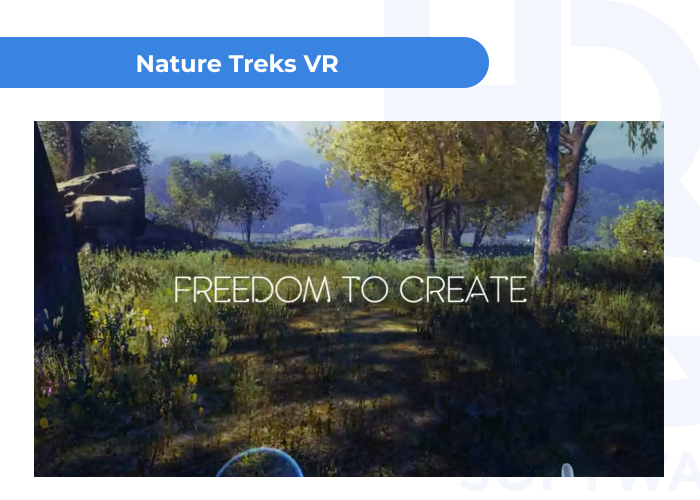
Nature Treks VR, for example, offers beautiful, immersive nature walks. Seniors can explore serene environments like forests, beaches, and mountains without leaving their homes. The calming visuals and sounds of nature can reduce stress and promote relaxation.
Cognitive games
Keeping the mind sharp is a priority for many older adults, and VR offers some fantastic options to support cognitive health. Cognitive games are designed to stimulate the brain, improve memory, enhance problem-solving skills, and keep the mind sharp. These games can be a fun and engaging way for seniors to exercise their cognitive abilities.
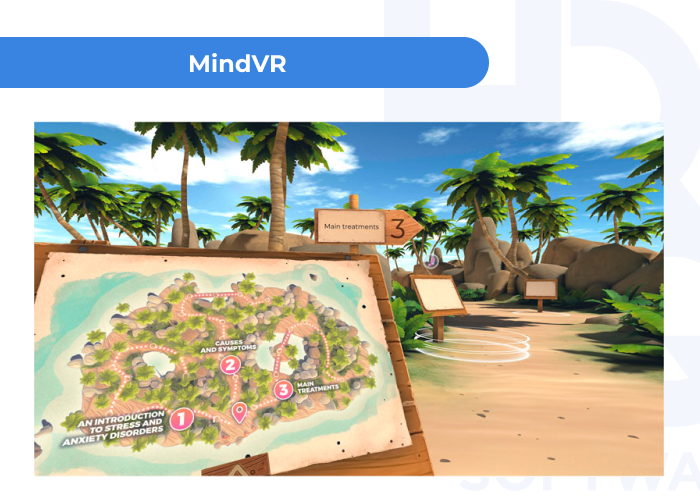
One example is MindVR, which offers a library of content specifically created for older adults. The platform includes a variety of cognitive games and activities that target memory, attention, and problem-solving skills. The games are tailored to be accessible and enjoyable for seniors, helping to keep their minds active and engaged.
Social and multiplayer experiences
As we’ve mentioned above, social isolation can be a significant issue for seniors, especially for those who live alone. One of the most rewarding aspects of Virtual Reality for seniors is the ability to connect meaningfully with others, regardless of physical distance. Multiplayer VR experiences allow seniors to connect with others, make new friends, and participate in group activities.
Another example is VRChat, a popular social VR platform that allows users to create and explore virtual worlds. In VRChat, seniors can interact with others, join group activities, and even create their own virtual spaces. The platform supports a wide range of social experiences, from casual hangouts to organized events, providing ample opportunities for social interaction.
For instance, AltspaceVR is a social VR platform where users can attend events, join clubs, and interact with others in a virtual space. AltspaceVR hosts a variety of activities, including talks, workshops, and social gatherings. Seniors can join communities of interest, meet new people, and stay socially engaged.
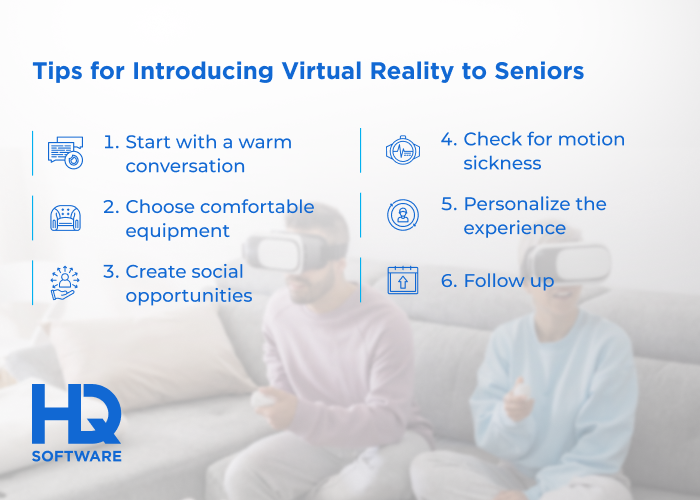
Tips for Introducing Virtual Reality to Seniors
Introducing VR to seniors can be a wonderful experience, and it’s great that you want to approach it thoughtfully. So, below I’ll put some tips that I find helpful for creating an enjoyable introduction when developing VR projects.
Start with a warm conversation. Begin by explaining VR in simple, relatable terms, such as comparing it to watching a movie or looking through a window into another world. This helps make the concept feel familiar and less intimidating.
Choose comfortable equipment. Pick VR headsets that are lightweight and adjustable. Seniors often appreciate comfort, so make sure the device doesn’t feel heavy or cumbersome. Don’t jump straight into intense or fast-paced VR experiences. Start with calming environments like virtual nature walks or simple games that are easy to navigate.
Create social opportunities. If possible, introduce VR in a group setting with friends or family. Sharing the experience can make it more fun and less intimidating.
Check for motion sickness. Some seniors might feel dizzy or nauseous. Keep sessions short initially and choose content that minimizes motion to avoid discomfort.
Personalize the experience. Tailor the VR content to their interests: traveling to a favorite destination, exploring museums, listening to their favorite music in a virtual concert, etc.
Follow up. If they want to remove the headset after just a few minutes, that’s okay. Let them explore at their own comfort level and reassure them it’s all about enjoyment. After the session, talk about what they enjoyed or didn’t. Use their feedback to plan future VR experiences that suit them best.
Introducing VR with kindness, patience, and a focus on comfort can open up a whole new world for seniors. However, let’s take a look at the key challenges associated with using VR with older adults.
Considering custom software?
Hymux Technologies’s team of experts can design and develop the perfect solution for your business. Let’s discuss it
Many older adults experience motion sickness, eye strain, or balance issues during VR use, especially with fast-paced environments. For example, a user with early-stage Parkinson’s might find a virtual shopping trip overwhelming due to sudden movements, while someone with cataracts might struggle with screen clarity. These discomforts can deter adoption or lead to health risks like falls.
How Hymux Technologies overcomes it: We reduce motion intensity or enable “comfort mode” instead of smooth movement. Our developers use ergonomic headsets with adjustable straps, lightweight materials, and anti-glare lenses.
2. Cognitive and technical barriers
Older adults often face steep learning curves, particularly with complex menus, controllers, or abstract VR interactions. A user with mild cognitive impairment might forget how to navigate a virtual museum, while someone unfamiliar with smartphones might feel frustrated by VR setup. This can lead to anxiety, disengagement, or reliance on caregivers.
How Hymux Technologies overcomes it: We can replace traditional gamepad controls with voice commands, gesture-based navigation, or single-button systems. Moreover, we offer step-by-step tutorials with clear verbal instructions. For instance, “Press this button to move forward.”
3. Lack of content relevance and motivation
Generic VR applications such as gaming or abstract simulations often fail to engage older adults, who may prefer social interaction, reminiscence therapy, or low-intensity activities like virtual gardening. A 75-year-old grandmother, for example, might be more excited to revisit a digital version of her childhood home than to play a futuristic racing game.
How Hymux Technologies overcomes it: Our designers create customizable experiences based on user interests including virtual book clubs, family photo albums, or guided meditation. We can also partner with healthcare providers to integrate therapeutic VR for cognitive exercises, physical therapy, or combating loneliness. Finally, we always employ user feedback loops to refine content, letting older adults co-design features they find meaningful.
The Future of VR in Elder Care
As people live longer, maintaining mental agility, emotional well-being, and physical health becomes more complex. Technologies like VR are complementing traditional care models by delivering experiences that are scalable and personalized.
Studies show these are the key trends shaping the next 5–10 years of VR in elder care:
Cognitive stimulation and dementia care.VR environments can simulate meaningful memories, familiar places, or calming scenarios tailored for those with Alzheimer’s or dementia. Studies show that sensory-rich virtual experiences can reduce agitation and improve mood and memory recall.
Physical rehabilitation and fitness. With VR, seniors can engage in fun, interactive games that improve balance, coordination, and strength, while feeling like they’re, for example, playing tennis with a grandchild. Such gamified therapy routines with real-time feedback help to adapt difficulty levels and integrate with wearable fitness trackers.
Therapeutic escapism and emotional well-being. Sometimes, a break from reality is just what’s needed. Whether it’s escaping to a beachside cabin or revisiting a childhood home, VR offers therapeutic environments that promote relaxation, mindfulness, and joy. Here the biggest emerging trend is customizable “emotional wellness journeys” guided by AI therapists or caregivers, blending ambient sounds, meditative visuals, and gentle movement.
At its heart, the future of VR in elder care isn’t about replacing human connection. It’s about giving seniors more choices, dignity, and joy in their daily lives. VR can help users regain a sense of independence, relive cherished memories, or simply let them feel less alone.
Would you like personalized recommendations for VR solutions based on a loved one’s needs? Contact us to know more about our VR development services.
References
University of Illinois.Human Extended Reality Interaction (HXRI) Laboratory – “Virtual Reality to Support Cognitive Health and Engagement and Socialization Among Aging Adults” https://hxri.ise.illinois.edu/create-vr/
A developer with extensive expertise in AR/VR, very ingrained into the topic of Mixed Reality development. Shares his knowledge and the results of many years of work.
VR headsets can benefit the elderly in various ways, provided they are used appropriately. They can enhance cognitive function, provide virtual travel experiences, and offer physical therapy opportunities. However, it’s essential to consider potential issues like motion sickness, eye strain, and the need for assistance. So, it’s worth consulting a healthcare provider first.
Why is there an age limit for VR?
Most VR headsets have a minimum age recommendation (often 13+) as a precaution by manufacturers. This is to protect the developing vision and sense of balance in young children. Importantly, there is no upper age limit, making VR a safe and accessible technology for seniors to enjoy.
How to explain VR to an old person?
Start with simple explanations – “stepping into a photo.” Use comfortable headsets and gentle experiences like nature walks. Encourage social connection and be mindful of motion sensitivity. Personalize with familiar interests, prioritizing comfort and letting them set the pace – fostering curiosity and a positive, empowering introduction to this exciting technology.
What kind of VR experiences are best suited for seniors?
For seniors, VR experiences that focus on relaxation, cognitive stimulation, and gentle physical activity are ideal. Virtual travel, nature walks, memory games, and light exercise routines can enhance wellness without causing discomfort. Avoiding fast-paced or intense experiences helps prevent motion sickness and eye strain.
Are there VR programs designed specifically for elderly users?
Yes, many VR programs are designed specifically for elderly users. These focus on gentle exercise, cognitive games, social interaction, and virtual travel. They prioritize easy navigation, comfort, and safety to enhance seniors’ wellness. For example, MindVR, Nature treks VR, Guided meditation VR, Wander, etc.
Can VR help seniors with cognitive decline or dementia?
Yes. VR engages memory and cognition via immersive reminiscence therapy, virtual travel, or puzzles. It activates brain regions linked to memory. Guided sessions safely boost mental stimulation, social connection, and mood. Research suggests it may slow cognitive decline, though it’s not a cure.
We are open to seeing your business needs and determining the best solution. Complete this form, and receive a free personalized proposal from your dedicated manager.