Practical firefighter training is a key element in ensuring effective performance during real emergency situations. Regular exercises help develop the physical and mental resilience of rescuers, as well as essential skills for working with protective equipment and operating in confined spaces.
As training demands grow, so does the need to modernize traditional approaches. Emerging technologies, in particular Virtual Reality (VR), offer new opportunities. VR allows firefighters to simulate dangerous scenarios without real-world risks, test coordination under pressure, and evaluate theoretical knowledge in immersive, realistic environments. While it cannot fully replace hands-on training with isolation gear, VR training serves as a powerful addition to traditional methods, enhancing both the quality and safety of firefighter training.
Using VR technologies in firefighter training offers several distinct advantages over traditional training methods.
Maximum realism and total immersion
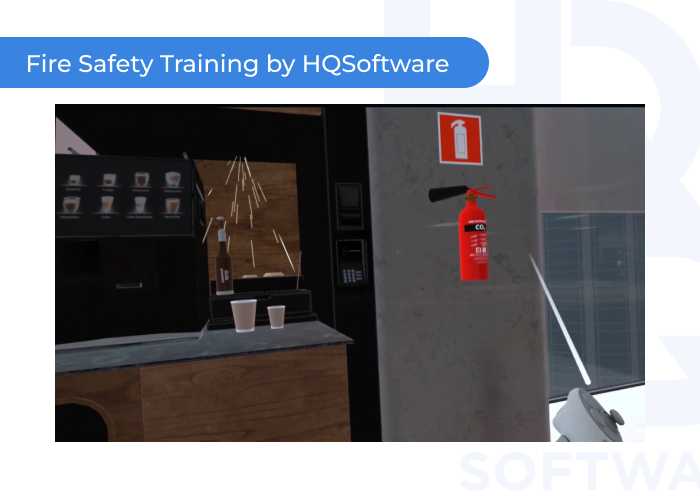
Virtual Reality makes it possible to create a learning environment that is as close as possible to emergency conditions. With three-dimensional graphics, audio, visualization of smoke and fire, and the ability to interact with objects, trainees can more effectively immerse themselves in conditions that simulate real fires — from smoke-filled corridors of residential buildings to industrial facilities.
Example: In a VR simulation, firefighters can practice evacuating people from a burning building with limited visibility and unstable construction, which is difficult to replicate in reality without significant cost and risk.
Safe practice of dangerous scenarios
Traditional firefighter training often involves starting real fires. Even though these fires are controlled, they are still dangerous to the trainees and can result in injuries or even death. In addition, fires release smoke and pollutants into the atmosphere, affecting the air quality in the surrounding area.
Virtual Reality, on the contrary, is able to simulate extremely dangerous situations such as explosions, collapses, and fire spreading, without risking the life and health of the participants. This enables firefighters to repeatedly train in conditions that are impossible to create in traditional drills.
Example: In VR training, firefighters can safely practice the actions needed in a gas cylinder explosion or to extinguish a fire at an oil depot.
Adaptability of firefighter training
In addition, VR can be tailored to the individual needs of each trainee. The virtual environment allows you to customize the difficulty of tasks, repeat certain scenarios, or switch to more advanced levels of training.
Example: Novice rescuers can start with basic smoke-filled room orientation tasks, while experienced firefighters can work through multi-stage scenarios to rescue victims in a structural collapse.
Considering custom software?
Hymux Technologies’s team of experts can design and develop the perfect solution for your business. Let’s discuss it
Hymux Technologies is a software development company that specializes in developing AR/VR solutions. Therefore, we can confidently say that Virtual Reality is a unique tool that helps to reproduce training scenarios that would be too expensive, complex or dangerous in reality. When it comes to firefighter training, there are three key areas where VR is particularly effective.
Emergency response scenarios
VR can be used to simulate different types of emergencies, from a house fire to an accident at a chemical plant. Trainees are immersed in a realistic environment and practice evacuating people, interacting with colleagues, and making decisions under time pressure. Such training allows firefighters to develop skills in coordination, orientation under stressful conditions, and quick response — without risking their lives.
Fire behavior and suppression techniques
Virtual Reality allows users to visualize how fire spreads in different environments. For example, the type of room affects the speed and direction of flame spread. In a wooden house, fire takes over structures much faster than in a concrete building. In narrow hallways, flames spread out in a very linear way, while in large halls, flames can rise up and cover the space from above. The presence of flammable materials such as furniture, fabrics, or chemicals also affects the intensity of the fire.
In VR training, firefighters learn to recognize these features and choose the right extinguishing methods: with water, foam, powder or gases.
It is also possible to simulate typical mistakes in VR training, for example, an incorrect choice of angle of attack during extinguishment or a delay in cutting off the air supply. The virtual environment allows trainees to see the consequences of such actions. This helps them to better understand fire behavior and avoid serious mistakes in the real world.
Equipment handling and safety protocols
Virtual Reality allows firefighters to safely learn how to operate firefighting equipment such as hoses, hydrants, breathing apparatus, ladders and rescue devices. They can also practice critical safety protocols such as equipment checks before entering a hazardous area, command interaction, alarm signaling, and what to do in the event of equipment failure. Practicing these procedures in VR helps build sustainable habits that are especially important in the real world.
Top 5 VR Firefighter Training Simulators
1. FLAIM Trainer
FLAIM Systems, an Australian startup, made a strong impression when it introduced its product to the world: the FLAIM Trainer. It conveys not only visuals but also tactile sensations. The complex simulates the behavior and recoil of a fire hose and warms the user with a thermal vest, reproducing the experience of firefighters in scenarios with different locations of flame sources.
Trainer tracks real-time training data including task speed, air and water usage, stress levels, trainee movement and attention, and interaction with objects such as gas meters, electrical boxes, and the fire itself.
FLAIM has developed more than 80 training scenarios ranging from wildfires in remote locations to fires on airplanes, industrial sites and in homes.
Because FLAIM training is virtual, firefighters and instructors are not exposed to carcinogens. According to the company, 2,000 hours of annual training with its system can save 20 million liters of water and 27 tons of carbon emissions.
2. XVR Simulation
XVR Simulation is a virtual training platform for emergency services developed in the Netherlands. Today it is used by more than 300 organizations around the world, including fire academies, police, medical services and civil protection centers. More than 150,000 professionals from more than 50 countries are trained on the platform each year.
XVR Simulation allows recreating many emergency scenarios, from fires in residential and industrial buildings to chemical leaks and mass accidents. The instructor independently constructs the scenario: selects the location, arranges objects, sets initial conditions and controls the development of events.
One of the main advantages of XVR Simulation is the ability to train multiple participants together. In one scenario, up to 99 people, including firefighters, police officers, rescue workers and medics, can interact simultaneously. This is especially important for practicing coordination and teamwork under stress.
Many training centers note that the platform helps simulate rare but critical situations that are difficult or impossible to replicate in reality. For example, fighting a fire in a subway or evacuating an airliner. This makes VR simulations an important addition to traditional forms of training.
3. ForgeFX Firetruck Simulator
The Firetruck Simulator was created by ForgeFX Simulations in collaboration with Pierce Manufacturing, a top fire apparatus manufacturer in the United States. This virtual simulator is used for training in the cab and on the platform of a fire truck. It is connected to real controls such as the steering wheel, joysticks and buttons that are used to operate the vehicle and its extension ladder in real life. This makes training as similar as possible to operating real equipment.
During the VR simulation, the operator controls a 100-foot-long extension ladder. The system takes into account all technical parameters, including boom length, angle of installation on slopes and the ability to stabilize the platform on uneven terrain. All of this is simulated in a virtual environment, allowing training to take place without the use of real equipment.
The advantage of this simulator is that it allows trainees to practice complex maneuvers in challenging settings —such as navigating narrow streets, working on steep inclines, or responding to incidents below ground level, like basement fires.
4. VSTEP Response Simulator
VSTEP Response Simulator is a virtual training platform for emergency services. It provides simulations of fires, accidents, natural disasters and other emergencies in a fully interactive 3D environment.
Instructors can create their own scenarios using more than 700 objects — from buildings and equipment to victims. Participants practice their actions in a dynamic environment where the course of events can be changed in real time. The system records all actions, including voice commands and movements. After the training, a detailed debriefing is conducted to evaluate the decisions made and teamwork.
VSTEP Response Simulator is used by firefighters, police and rescue workers in various countries. It helps to develop skills of response, decision-making and interaction while saving resources and without risking life.
What Are the Challenges of Implementing VR for Firefighter Training?
While Virtual Reality offers great opportunities for firefighter training, in practice, its implementation presents some serious challenges:
High cost of equipment and development
Creating high-quality VR content that accurately reproduces fire scenarios requires large investments. It requires not only the equipment itself, but also the development of detailed scenarios with realistic physics and interactivity.
However, working with experienced developers such as Hymux Technologies allows you to optimize your budget through over-utilized modules, precise elaboration of requirements and application of already existing technological solutions.
Technical complexity and support
To fully benefit from VR, you need experts who can configure the system, keep it running, and troubleshoot failures quickly. Fire departments often do not have IT staff, and technical training requires time and resources.
The Hymux Technologies team offers comprehensive solutions, including hardware customization, system integration, and ongoing support. This helps reduce the burden on the customer’s internal resources.
Need a custom software solution? We’re ready to help!
Hymux Technologies has a team of skilled professionals ready to tackle the project. Ask me!
Not all firefighters feel confident using new technologies, especially those who are used to traditional, hands-on training methods. The introduction of Virtual Reality can seem overwhelming or unfamiliar, leading to hesitation or resistance. In many cases, instructors may also lack experience with digital tools, which makes it harder to incorporate VR smoothly into the training process.
To overcome this challenge, Hymux Technologies offers intuitive interfaces and training modules to help firefighters quickly learn the system and comfortably get started with VR training.
Adaptation of training programs
Traditional firefighter training methods do not always fit easily into the VR format. To fully use the technology, training methodologies need to be revised or restructured. This process takes time and requires close collaboration between developers and firefighting professionals.
To address this, Hymux Technologies’s experts work directly with experienced fire instructors. This partnership ensures that the VR content aligns with real-world scenarios and complies with industry regulations.
Developing Custom VR Training Solutions With Hymux Technologies
Each VR-learning implementation project is unique and requires an individual approach. The Hymux Technologies team accompanies the client at all stages of development — from idea to implementation and technical support.
With years of experience in developing VR training solutions, including simulations for emergency response and fire safety, our team knows how to turn complex training needs into effective, engaging virtual experiences.
Key steps include:
Analyzing training needs and objectives: We start by looking at the customer’s training requirements and end goals. This helps determine what skills and scenarios need to be transferred to VR.
Design and prototyping: Our specialists develop a concept and create an interactive prototype to visualize how the training solution will look and work in VR.
Content and functionality development: We create realistic 3D scenarios and interactive elements and customize the interface for the target audience. We take into account ergonomics, physiological features of users, and specifics of the fire department.
Integration and testing: We conduct user testing, collect feedback, and make adjustments to improve training effectiveness.
Implementation and maintenance: The Hymux Technologies team provides technical support, instructor training, and software updates as needed.
Hymux Technologies offers not just a VR product, but a complete solution tailored to your challenges and environment.
Contact us to discuss how we can help implement VR into your team’s training system.
A developer with extensive expertise in AR/VR, very ingrained into the topic of Mixed Reality development. Shares his knowledge and the results of many years of work.
How does VR improve fire safety training compared with traditional methods?
VR offers realistic, immersive scenarios that can’t be safely recreated in real life. It allows trainees to practice high-risk situations repeatedly, build confidence, and improve decision-making under pressure. Unlike traditional methods, VR enables error-based learning without real-world consequences, making it a safer and more effective way to train for emergencies.
What equipment is needed for VR fire safety training?
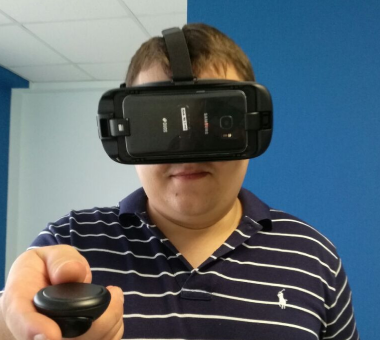
VR fire safety training typically requires a VR headset (like Meta Quest or HTC Vive), motion controllers, and a powerful computer or standalone device. Additional equipment may include sensors or accessories for hand tracking or simulated tools. The setup can be scaled from basic to advanced depending on the training goals and budget.
Is VR training effective for both new and experienced firefighters?
Yes, VR training is effective for both. New recruits gain hands-on experience in a safe environment, while experienced firefighters can refresh skills, train for rare scenarios, or test leadership under stress. VR scenarios can be customized to suit different skill levels, ensuring relevant and challenging training for all participants.
How much does VR fire training typically cost to implement?
Costs vary widely based on complexity. A basic setup may start around $20,000, including hardware and simple content. Custom, high-fidelity scenarios can raise the price to $50,000 or more. Hymux Technologies helps optimize budgets by tailoring solutions to specific needs and offering reusable components to reduce development costs.
Is VR fire training recognized by regulatory bodies or fire departments?
Recognition depends on the region and the specific authority. Many fire departments and safety organizations are adopting VR as a supplemental tool, and some regulatory bodies accept VR training hours if the program meets required standards. Hymux Technologies works with clients to ensure training aligns with local regulations and best practices.
We are open to seeing your business needs and determining the best solution. Complete this form, and receive a free personalized proposal from your dedicated manager.