In today’s business environment, speedy decision-making is a critical competitive advantage. Yet many organizations still spend hours (or even days) preparing routine financial reporting, delaying insights that could drive better outcomes. This approach is no longer sustainable when faster, more efficient alternatives are already available.
Artificial Intelligence (AI) is reshaping financial reporting by automating manual processes, improving data accuracy, and delivering timely insights. Drawing on our experience implementing AI solutions for clients, this article outlines the key benefits and practical applications of AI in financial reporting and explains how organizations can adopt AI for financial analysis.
The goal of implementing AI is not to adopt a trendy technology for its own sake, but to solve a real business problem. So what’s the issue with financial reporting? Let’s take a closer look.
If you’re managing a company or team, or developing a business, you are familiar with this scenario: spreadsheets, summaries, comparisons of plans and facts, reports for investors, tax reporting, internal accounting. As a rule, all this data is scattered, collected manually, and requires verification, reconciliation, and formatting. And one mistake in an Excel formula can distort the picture of the business in seconds.
What’s unpleasant is that these tasks are important but don’t create new value on their own. Reporting is not strategy, growth, or development, but a routine foundational task that takes up the lion’s share of the time of financial specialists and managers. This is where Artificial Intelligence begins to play a key role.
AI in financial reporting takes care of routine tasks. It automatically collects data from different systems, converts it into a single format, checks for errors and inconsistencies, compares plans and actuals, and identifies anomalies and deviations. Instead of manually preparing reports, the finance team receives a ready-made, up-to-date, and verified picture of the business.
Want to see how AI transforms business operations in practice?
Explore real-world case studies from Hymux Technologies to discover how companies use AI to automate processes, improve efficiency, and gain actionable insights across different areas of their business.
By automating routine tasks and providing real-time insights, AI transforms the way finance teams work and helps them make smarter, faster decisions. Let’s explore the key advantages of AI financial reporting in action.
Faster Close and Real-Time Reporting
AI financial reporting speeds up period closes and report preparation from days to just a few hours. Data is automatically collected, checked for errors, and transformed into ready-to-use reports for management and investors. This means you get an up-to-date view of your business in real time, enabling faster and more informed decision-making.
Higher Accuracy and Automated Reconciliations
Errors in spreadsheets can be costly. Using AI in financial reporting minimizes human mistakes: accounts are reconciled, transactions verified, and reconciliations automated. Finance teams spend less time on routine tasks and can focus on analysis and strategic work, rather than hunting for errors in Excel.
AI financial statement analysis goes beyond collecting numbers — it detects anomalies, forecasts trends, and highlights variances. For example, it can automatically flag unexpected spikes in expenses, unusual revenue patterns, or discrepancies between planned and actual results. Teams can drill down into the underlying transactions in seconds, uncover root causes, and take corrective action before small issues turn into bigger problems.
Stronger Compliance and Audit Readiness
AI financial information helps ensure regulatory compliance and audit readiness. Reports are automatically generated in the required formats, with a clear history of all changes, making financial processes transparent, controlled, and fully audit-ready. For example, AI can track every transaction, highlight any deviations from standard policies, and even alert teams to potential compliance risks before they escalate. This reduces the stress involved in audits, speeds up regulatory reporting, and gives finance teams confidence that nothing has been overlooked.
How to Implement AI for Financial Reporting in Your Company
Implementing AI in financial reporting can seem complex, but breaking it into clear steps makes the process manageable. Here’s a practical roadmap to get started and ensure success.
1. Prioritize Use Cases and Define Success Metrics
Start by identifying the areas where AI in financial reporting can deliver the most value. This could be automating reconciliations, speeding up period close, or improving forecast accuracy. Define clear success metrics for each use case, such as reduced closing time, fewer errors, or faster report generation. Prioritizing ensures your team focuses on the initiatives that have the biggest impact first.
2. Prepare Data and Governance (Quality, Access, Ownership)
AI is only as good as the data it works with. Assess the quality, accessibility, and ownership of your financial data across systems. Standardize formats, clean historical records, and set governance rules to make sure AI has reliable and consistent information to work with. Without proper data preparation, even the best AI models won’t deliver meaningful insights.
AI depends on reliable data. Review the quality, accessibility, and ownership of your financial data across systems. Standardize formats, clean historical records, and establish governance rules to ensure consistent and trustworthy AI financial information. Without proper data preparation, even the best AI models won’t deliver meaningful insights.
3. Run a Pilot and Integrate With ERP/BI/Consolidation Systems
Instead of rolling out AI everywhere at once, start with a pilot project. Choose one high-value use case — for example, AI financial statement analysis for variance detection or forecasting — and integrate it with your existing Enterprise Resource Planning (ERP), Business Intelligence (BI), or consolidation tools. A pilot helps validate results, refine workflows, and build confidence before scaling further.
4. Put Controls in Place and Scale
Once the pilot proves successful, establish controls, monitoring, and audit processes to ensure reliability and compliance. Train finance teams to work with AI insights and gradually scale to other processes and departments. With proper governance, your AI solution can move from a single use case to a company-wide transformation in financial reporting.
Not sure how to start implementing AI in financial reporting?
Hymux Technologies helps you identify high-impact use cases and implement AI solutions that integrate smoothly with your existing systems.
AI in financial reporting is not a separate tool or platform, but an entire ecosystem of solutions designed to automate, analyze, and support various aspects of financial activities. Below are some examples of practical applications of various AI-based tools.
Full-Cycle Automation: BlackLine, Workiva
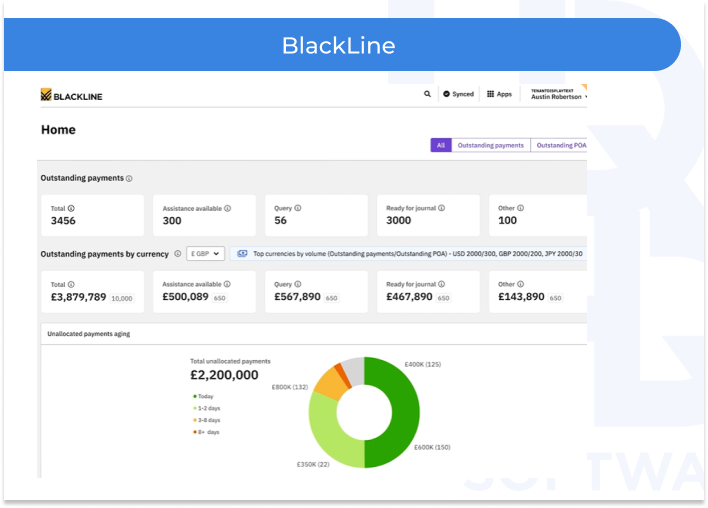
BlackLine is a platform for automating the financial close and control processes. It centralizes data, automates reconciliations, manages close tasks, and gives finance teams a transparent, controlled reporting process. BlackLine is especially valuable for mid‑to‑large organizations with complex ERP systems. It helps reduce manual effort and accelerate the financial close cycle.
Workiva is a versatile reporting and compliance platform that helps teams manage audit, controls, and disclosure workflows. It stands out for its intuitive interface, powerful dashboards, and traceability of data, making the reporting process clearer and less error‑prone. Workiva is particularly strong for companies with high compliance needs and complex reporting structures.
FP&A and Analytics: Vena Solutions, DataRails
Vena Solutions is an FP&A system built around Excel as the primary interface, combining the familiarity of spreadsheets with a centralized database, workflows, and version control. The result: less file chaos, better collaboration, and more trust in the numbers.
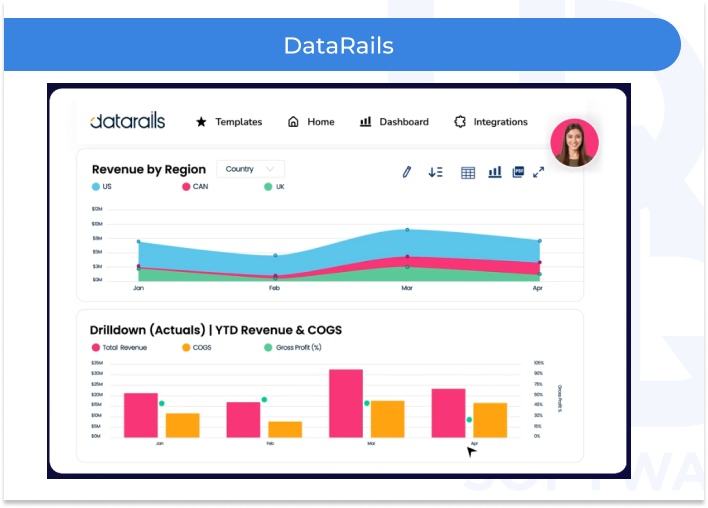
DataRails enhances Excel environments with automation and data centralization. It speeds up financial consolidation and variance reporting, and includes analytics features that help finance teams generate insights and visualizations more quickly.
Bookkeeping and Accounting: Botkeeper, Zeni
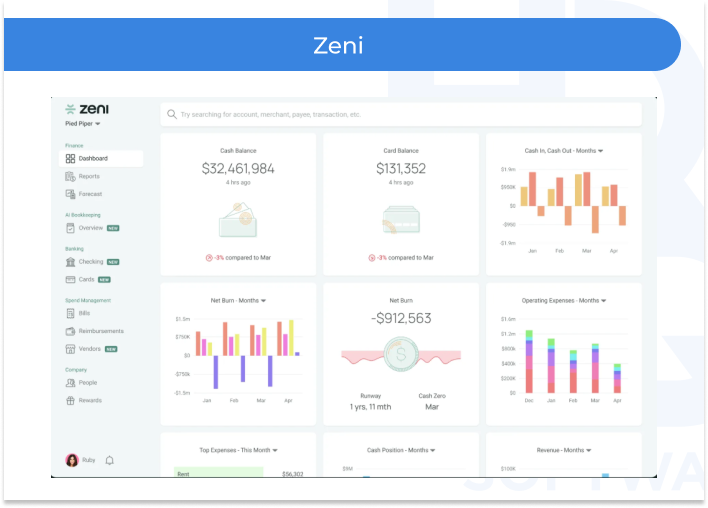
Zeni combines AI automation with human financial expertise. It automatically classifies transactions, maintains real‑time books, and offers additional tools like automated bill payments and treasury monitoring. This makes Zeni a strong choice for small and growing businesses that want accurate accounting without expanding their finance teams.
Botkeeper uses Artificial Intelligence to automate day-to-day bookkeeping and accounting tasks, including transaction classification, reconciliations, and financial reporting. It is designed to reduce manual data entry and improve accuracy, allowing accounting teams to focus on higher-value advisory and analytical work. Botkeeper is especially well suited for accounting firms and growing businesses that need scalable, consistent bookkeeping processes.
General Purpose: ChatGPT or Claude for Analysis
ChatGPT or Claude are not replacements for core finance systems, but powerful complements. They can be used for interactive analysis of reports, explaining variances, generating narrative summaries, or drafting explanations for stakeholders. These tools are especially useful when fast interpretation of results or management commentary is needed, without heavy setup.
Limitations to consider:
No native data governance or controls: They rely on the quality and structure of the data provided and do not enforce financial controls or audit trails.
Limited system integration: Unlike dedicated finance platforms, they do not automatically connect to ERP or accounting systems without additional setup.
Not a system of record: Outputs should be reviewed and validated, as these tools are designed for analysis and interpretation, not for producing official financial reports.
Struggling with slow, error-prone financial reporting?
Hymux Technologies helps you automate data collection, reconciliation, and reporting using custom AI solutions tailored to your systems.
AI‑Powered Reporting Solutions With Hymux Technologies
Hymux Technologies specializes in building custom AI-driven reporting and analytics solutions for companies that need more than off-the-shelf tools. With deep expertise in data engineering, Machine Learning, and Artificial Intelligence for data analytics, the team helps organizations automate complex financial workflows, improve data quality, and turn raw financial data into actionable insights.
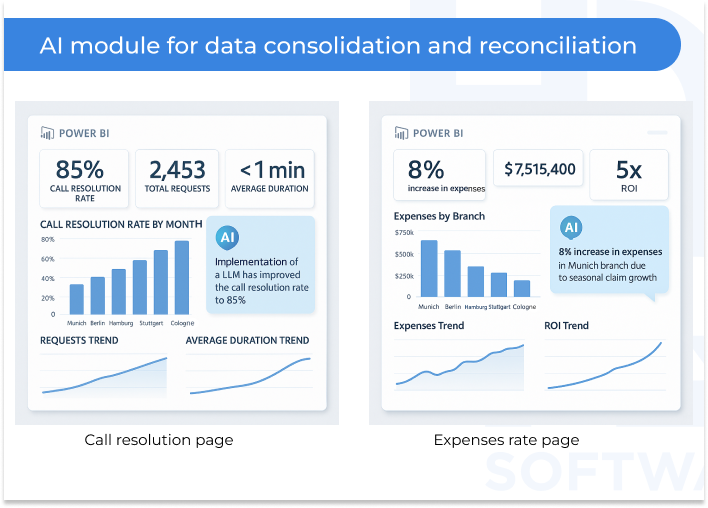
One example is a project delivered for a mid-sized insurance company operating 12 branches across Germany. Before partnering with Hymux Technologies, the finance team relied on manual consolidation of spreadsheets and exports from SAP, Salesforce, and Excel. This slow, error-prone process resulted in a five-day reporting cycle and limited the CFO’s visibility into real-time financial KPIs.
Hymux Technologies developed an AI-powered financial reporting and consolidation platform that automatically integrates data from multiple systems, performs AI-based reconciliation and anomaly detection, and generates clear, narrative explanations for KPI deviations using NLP.
The solution delivers interactive Power BI reports in just one day instead of five, enabling the finance team to work five times faster while significantly increasing trust in the data. As a result, the client streamlined financial analysis, improved decision-making accuracy, and achieved a five-times return on investment within three months.
What Are the Challenges for Financial Reporting With AI?
While AI financial reporting can significantly improve the speed and accuracy of finance processes, its implementation is not without challenges. Understanding these limitations is essential for setting realistic expectations and building reliable, trustworthy AI-driven reporting systems.
Data Quality and Fragmentation
AI relies on high-quality, well-structured data. In reality, financial data is often scattered across ERPs, CRMs, spreadsheets, and legacy systems. If the underlying data is inconsistent or incomplete, AI models can easily make mistakes. For example, they may miscalculate profits or overlook important details, leading to inaccurate results in AI financial statement analysis.
Transparency and Explainability
Artificial Intelligence systems are often compared to “black boxes” because it is difficult to understand how they work and how they make their conclusions. But finance teams need to understand why numbers change, not just see the output. This lack of explainability can reduce trust, especially in regulated environments or during audits, where AI for financial analysis must be clearly justified.
Integration With Existing Systems
Most organizations rely on complex ERP, BI, and consolidation environments built over many years. Integrating AI into these ecosystems often requires additional data pipelines, APIs, and customization. Without careful planning, integration efforts can become time-consuming and disrupt established reporting workflows.
Security, Privacy, and Access Control
Financial reporting involves highly sensitive data, including revenue figures, customer information, and internal performance metrics. Introducing AI into reporting workflows increases the need for strong security measures, especially when handling AI financial information across multiple systems or cloud environments. Without proper safeguards, organizations may face risks related to unauthorized access, data leaks, or misuse of confidential financial information.
The Future of AI in Financial Reporting
It is important to understand that Artificial Intelligence does not replace financial analysts, but rather complements their capabilities. In the foreseeable future, the optimal model will be a synergy between humans and machines, where:
AI handles routine data processing, pattern identification, and the preparation of basic financial reports.
Humans interpret the results, provide business context, make strategic decisions, and determine directions for further analysis.
This model of collaboration allows for maximum use of the strengths of both Artificial Intelligence and human experience and intuition.
If you’re exploring how AI can enhance your financial reporting or want to build a solution tailored to your business, our team is ready to help. Contact us to discuss your goals and see how AI financial reporting can work in practice for your organization.
MDPI – The Role of Artificial Intelligence in Improving the Efficiency and Accuracy of Local Government Financial Reporting: A Systematic Literature Review https://www.mdpi.com/1911-8074/18/11/601
To ensure the outstanding quality of Hymux Technologies’s solutions and services, I took the position of Head of Production and manager of the Quality Assurance department. Turn to me with any questions regarding our tech expertise.
Which Financial Reporting Tasks Benefit Most From AI?
AI delivers the most value in repetitive and data-heavy tasks. These include data consolidation, reconciliations, variance analysis, forecasting, and report generation. AI financial reporting tools are especially effective where speed, consistency, and accuracy matter more than manual judgment.
Will AI Replace Accountants and Finance Teams?
No. AI in financial reporting is designed to support finance teams, not replace them. AI handles routine processing and analysis, while accountants focus on interpretation, compliance, and strategic decisions. Human expertise remains essential for context, judgment, and accountability.
How Does AI Improve the Month-End Close?
AI shortens the month-end close by automating reconciliations, validating data in real time, and flagging anomalies early. With AI financial statement analysis, teams spend less time fixing errors and more time reviewing insights, often reducing close cycles from days to hours.
What Data Do We Need to Start Using AI in Financial Reporting?
You typically need structured AI financial information from core systems such as ERP, CRM, accounting software, and spreadsheets. Data should be consistent, accurate, and well-defined. AI works best when historical data is available to train models and detect meaningful patterns.
What Are the Biggest Risks of Using AI in Financial Reporting?
The main risks include poor data quality, lack of transparency, security concerns, and over-reliance on automated outputs. Without proper controls, AI for financial analysis can amplify existing data issues. Therefore, strong governance, explainability, and human review are critical to mitigate these risks.
How Should We Choose AI Tools for Financial Reporting?
Start by defining your business goals and reporting pain points. Some tools focus on close automation, others on AI for financial statement analysis or forecasting. Consider integration with existing systems, compliance needs, scalability, and whether you need flexibility or out-of-the-box functionality.
How Long Does It Take to Implement AI in Financial Reporting?
Implementation timelines vary. Simple AI financial reporting tools can be deployed in weeks, while custom solutions may take several months. The timeline depends on data readiness, system complexity, integration requirements, and the level of automation and analytics you need.
Should We Build a Custom AI Reporting Solution or Buy One?
Buying a solution is faster and works well for standard reporting needs. A custom platform makes sense if your workflows are complex or industry-specific. Custom financial reporting solutions offer flexibility and differentiation but require more time and investment upfront.
We are open to seeing your business needs and determining the best solution. Complete this form, and receive a free personalized proposal from your dedicated manager.