Choosing from dozens of lipstick shades to highlight your unique beauty is no easy task. Sometimes women stand in front of a store display case for ages, hesitating and sorting through options. Today, this process can become faster and more enjoyable with the help of Augmented Reality technology. Your smartphone becomes your personal stylist, offering dozens of solutions in a matter of seconds. Virtual makeup, virtual try-on or digital perfume, once pure science fiction, are now available to everyone in a couple of clicks.
As a software development specialist, I see how Augmented Reality works, what benefits it brings to the beauty industry, and why more and more companies are seeking to implement AR into their services.
The Adoption of VR Technology in the Beauty Industry
AR technology in the beauty industry has gone beyond the experimental stage and is becoming a real growth tool for brands. There’s concrete proof of this.
The virtual makeup market continues to grow at an impressive rate. By 2029, it will reach $2.56 billion, with a compound annual growth rate (CAGR) of 23.1%.
Brands that have implemented AR have seen an increase in engagement: users spend more time in apps and on websites testing products, sharing their results on social media, and returning to try something new. For example, AR mirrors in Sephora stores have led to a 31% increase in sales.
Virtual try-ons can increase the likelihood of purchase by 2.4 times, making them a powerful tool for driving sales in the beauty industry.
L’Oréal Paris recorded a 150% increase in virtual try-ons, and users converted 30% more than regular shoppers.
All this shows that AR is not just a passing trend, but a proven business strategy. It creates a more engaging customer experience, strengthens brand loyalty, and delivers a tangible return on investment (ROI).
Applications of AR in the Beauty Sector
Augmented Reality has become a practical tool that changes how we choose and experience beauty products. From hair coloring to skincare and even fragrances, AR opens new possibilities for creativity and personalization. It makes beauty shopping more exciting than ever.
Virtual Hair Styling and Coloring
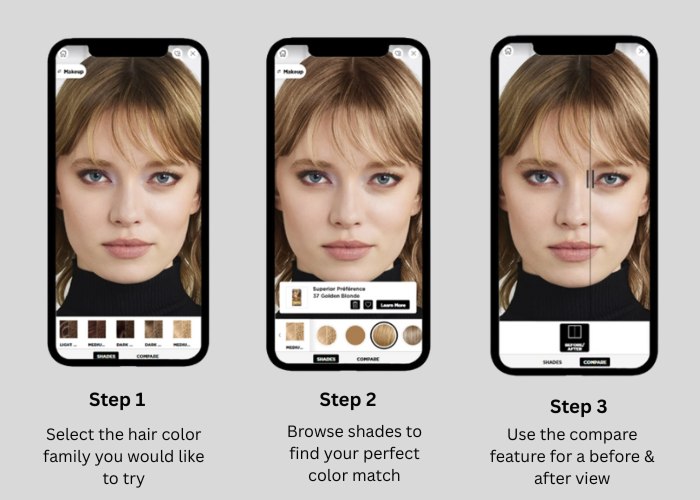
Every woman has at least once felt afraid of ruining her hair with a bad haircut or wrong color. Augmented Reality solves this problem: just turn on the camera and “try on” new shades or hairstyles in real time. No more guessing whether blonde or a bob will suit you — the technology allows you to see the result immediately and without risk.
A great example of this technology is the YouCam mobile app. It lets users experiment not only with makeup but also with different hair colors. You can try bold combinations, capture photos or videos of your new look, edit them, and save everything directly to your device. What used to be a stressful gamble becomes an enjoyable and creative process.
Another strong example is L’Oreal Virtual Try On. This tool focuses on a wide range of natural hair shades across the company’s product lines. It’s especially useful for those who want to preview subtle, realistic colors rather than dramatic transformations.
AR Skin Analysis and Personal Recommendations
Modern AR applications can scan the skin and identify its characteristics: dryness, pigmentation, enlarged pores. Based on this data, users are offered personalized recommendations for skin care and cosmetics selection. This turns the process of choosing a cream or serum into a precise and informed step, rather than a guessing game.
A good example is L’Oréal SkinConsult, developed in collaboration with dermatologists and based on Artificial Intelligence. The user simply uploads a selfie, and the algorithm analyzes seven signs of skin aging. The technology identifies wrinkles under the eyes, dark spots, loss of firmness, fine and deep wrinkles, and then creates a personalized skincare plan. This service helps to make recommendations as accurate and tailored to individual needs as possible.
Need a custom software solution? We’re ready to help!
Hymux Technologies has a team of skilled professionals ready to tackle the project. Ask me!
Smells are difficult to convey on screen, but brands have found a way to make them “tangible” in the digital world. With the help of Augmented Reality, entire fragrance stories are created: the user points the camera at the bottle and is transported into a visual world that conveys the mood of the fragrance. It can be a walk through a blooming garden or an evening in the big city. This kind of storytelling helps shoppers feel the “character” of a perfume before they even try it.
French perfume houses and fashion brands such as Gucci, Marc Jacobs, Maison Margiela, and Valentino have already started using Augmented Reality to create unique fragrance journeys in pop-ups, on packaging, and in eCommerce.
AR Filters for Social Media
Filters on Instagram and TikTok long ago expanded beyond entertainment. Today, they are one of the most accessible and effective ways to introduce your audience to your brand. Imagine: instead of a boring advertising banner, the user opens the camera and, with a couple of clicks, “tries on” new lipstick, shimmering eyeshadow, or even designer glasses. Everything happens right in the stories, without going to the store.
This experience turns marketing into a game. The user experiments with their image, shares the result with their followers, and receives likes and comments. At the same time, the brand gets free organic promotion and an engaged audience. Many beauty brands have already noticed that AR filters increase brand awareness, stimulate sales, and help form an emotional connection with customers.
This is especially effective with young consumers. They are eager to test new products through filters and then go to the website or app to make a purchase. That’s why major beauty brands like Sephora, NYX, and L’Oréal are actively investing in creating their own Augmented Reality masks for social media.
How AR Helps to Enhance the In-Person Shopping Experience
The purchase of cosmetics, accessories and perfumes in offline stores is also changing thanks to AR technology. It transforms the usual shopping trip into an interactive and exciting adventure: you can test dozens of products in a matter of minutes, see the results for yourself, and even get personalized recommendations without the help of a sales assistant.
Virtual Try-Ons
Let’s take a closer look at an Augmented Reality feature called “try-before-you-buy.” It’s as close to the real experience as possible: users can try on a product before buying it and see how it will look on them. This approach reduces doubts, increases confidence in the choice, and turns the shopping process into a game.
According to ARInsider, of the $2.372 million spent by consumers on AR-enabled products in 2020, the majority was spent on cosmetics, clothing, accessories, jewelry, bags, shoes, and furniture. These are precisely the categories where the appearance of the product plays a decisive role and where virtual fitting can replace physical interaction.
One of the pioneers in using AR as a sales tool was the beauty industry: back in 2014, L’Oreal launched the MakeUp Genius mobile app, which allows users to try on different looks using the company’s products. More than 10 million people downloaded the app, and more than 25 million looks were tried on using 65 million products.
AR Mirrors in the Retail Industry
Many brands are implementing AR mirrors—interactive installations in stores that allow shoppers to try on items with a simple touch of the mirror screen. This format makes the selection process quick and exciting: instead of going to the fitting room, customers can immediately see how clothes or accessories will look on them. Timberland, Uniqlo, and TopShop have already used similar solutions, turning a visit to the store into a vivid digital experience.
Research shows that AR mirrors can increase customer conversion by 60–80%, reduce returns by 25–40%, and increase the average check by 15–30%.
Digital Out-Of-Home Ads
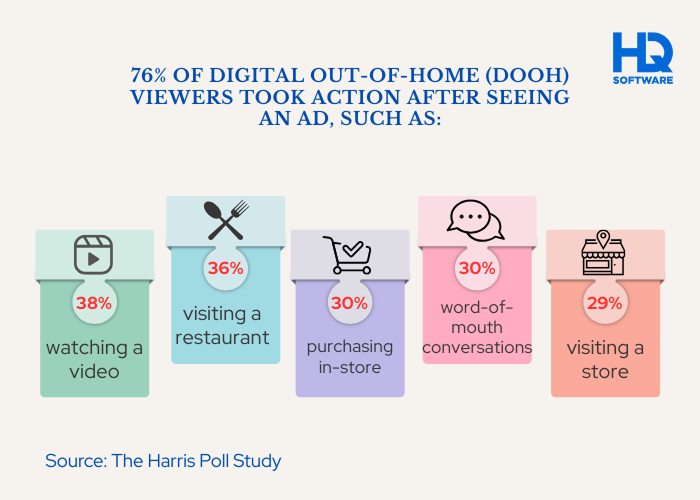
DOOH (Digital Out-Of-Home) campaigns with Augmented Reality elements are becoming increasingly popular. These are interactive billboards and digital panels in shopping centers or on the streets that literally engage passersby. Instead of just looking at an ad, people can point their smartphone camera or walk up to the screen and become part of a branded AR story.
For example, a cosmetics brand can launch an AR campaign where any passerby can “try on” a new shade of lipstick or eyeshadow right on the street. Such campaigns not only create a wow effect and attract attention, but also significantly increase engagement.
Benefits of Augmented Reality for Beauty Brands
Consumers enjoy interacting with Augmented Reality. For example, 56% of NielsenIQ survey participants said that AR gives them more confidence in product quality. 61% noted that they prefer retailers that offer augmented reality experiences.
But businesses often shy away from using this technology because it requires significant investment. In our opinion, if they took a closer look at the benefits AR brings to the beauty industry, they might give it a try.
Engages and retains attention: Virtual try-ons, AR filters, and AR mirrors encourage users to spend more time with the brand.
Increases sales and conversion: Customers are more likely to buy something they can “try on” virtually, and the average check size increases.
Reduces returns: Virtual try-ons help customers accurately evaluate a product before purchasing.
Creates a WOW effect: Going to a store or interacting with an app becomes an exciting digital adventure.
Stimulates organic promotion: Users are eager to share the results of AR fittings on social media, attracting a new audience at no additional cost.
Personalizes the experience: AR helps select makeup, skincare, or fragrance based on the customer’s individual characteristics.
Builds loyalty: An impressive and modern experience strengthens the emotional connection with the brand.
In an oversaturated beauty market, modern brands need more than quality products to stand out. Augmented Reality is not just a customer experience tool, but also a driver of business growth. It increases conversion rates, reduces costly returns, and boosts engagement. For business owners, this means higher sales, lower risks, and a stronger position against competitors.
Considering custom software?
Hymux Technologies’s team of experts can design and develop the perfect solution for your business. Let’s discuss it
At Hymux Technologies, we don’t just follow trends; we turn them into real business solutions. Our specialists have experience in developing Augmented and Virtual Reality applications that help companies boost sales and create unforgettable customer experiences.
For example, we created a virtual fitting room, which reduced returns by 30%. The client’s goal was to increase customer engagement and reduce returns in fashion e-commerce. We developed a mobile app that allows users to try on clothes on personalized virtual avatars. All you need to do is take a few photos from different angles, and the system creates a realistic 3D avatar that you can use to test out different looks before buying.
In addition to the mobile app, we have developed a web service for working with AR mirrors in stores. This solution allows you to visualize images on large screens, and the process can be controlled via a tablet. This format helps to combine online and offline shopping into a single exciting experience.
Hymux Technologies is more than just a team of developers. It’s a reliable partner that knows how to combine technological expertise with an understanding of business goals. We know how to implement AR and VR in a way that not only impresses users, but also increases sales, reduces costs, and helps brands stand out in the market.
Real-Life Examples of AR in the Beauty Industry
Augmented Reality has become an integral part of the strategies of both global brands and young companies. AR helps them not only stand out, but also increase sales and build closer relationships with customers. Here’s how various players use the technology:
MAC
MAC was one of the first to focus on large-scale AR solutions and created a virtual fitting room with more than 200 shades of lipstick, foundation, eyeshadow, and mascara. Users can test products directly through their smartphone or laptop camera, instantly changing looks and combinations. The service is unique in its high color accuracy and the ability to compare several options at once. This turns the selection process into an exciting experiment and helps customers find their ideal product faster. For the brand, this tool has become a powerful driver of online sales and has increased customer engagement.
Estée Lauder
This was one of the first global brands to actively use AR technology. Thanks to virtual shade selection for foundation and lipstick, customers were able to test the product before applying it. As a result, conversion rates increased 2.5 times compared to traditional shoppers. This showed that AR can be not only a marketing tool, but also a real sales driver.
Shiseido
The Japanese giant went even further by introducing AR mirrors with Twin Avatar and Skin Visualizer functions in its stores. The mirrors scan the skin, record its condition, create a digital avatar of the customer, and even predict changes. This has enhanced the personalization of service and cemented Shiseido’s reputation as a high-tech and innovative brand.
Garnier
Garnier actively uses Augmented Reality to help customers choose the perfect hair color shade. With the virtual try-on feature, users can turn on their smartphone camera or upload a photo and see how the selected color will look on their hair in real time. Virtual try-on takes into account skin tone and natural hair color, making the result as close to reality as possible. This service eliminates buyers’ fear of getting a bad dye job and significantly speeds up the selection process. As a result, customers make more confident decisions, and the brand sees an increase in conversions and a decrease in product returns.
INKHUNTER
Although the app was originally created for testing tattoos, it quickly became popular in the beauty industry. Users can “try on” designs on any part of the body in real time using their smartphone camera and see how they will look from different angles. This approach reduces the fear of making an irreversible choice and turns the process of selecting a tattoo or accessory into a game. Moreover, INKHUNTER is actively used by tattoo studios to attract customers and even by brands in the fashion and lifestyle segment to test temporary designs and collaborations.
Challenges and Limitations for AR in Beauty and Cosmetics
Despite rapid growth and impressive results, AR technology in the beauty industry is not yet a perfect solution. This technology has certain weaknesses that may prevent brands from implementing it everywhere.
First, the accuracy of virtual fitting rooms and applications depends on the quality of the camera and lighting, so sometimes shades may be displayed incorrectly. Second, developing and supporting AR platforms requires significant investment, and not every company is ready to make it. Third, there are still questions about personal data protection: scanning the face or skin involves collecting sensitive information, which may cause concern among some users.
Finally, it is important to note that Augmented Reality is not yet capable of completely replacing the physical experience. Many consumers still prefer to test products in person.
Many of these challenges are not insurmountable. The key to successful AR implementation lies in choosing a reliable technology partner that combines deep expertise with an understanding of business goals. Hymux Technologies has extensive experience in creating AR solutions for companies of various sizes and from different industries, including beauty, fashion, e-commerce, and retail.
If you are ready to discuss cooperation on your project or have any questions, please contact our team. We will help you turn AR from an expensive experiment into a tool for growing your business.
References
MDPI – Beauty Tech—Customer Experience and Loyalty of Augmented Reality- and Artificial Intelligence-Driven Cosmetics https://www.mdpi.com/2673-6470/5/2/21
A developer with extensive expertise in AR/VR, very ingrained into the topic of Mixed Reality development. Shares his knowledge and the results of many years of work.
AI and AR give beauty brands new ways to connect with customers. Shoppers can visualize products instantly, while AI analyzes skin needs to suggest tailored solutions. This reduces uncertainty and builds trust. For businesses, it means smarter marketing, stronger loyalty, and a shopping experience that feels both modern and memorable.
What Is an Example of Augmented Reality in the Beauty Industry?
A popular example is virtual makeup try-ons. With a smartphone camera, users can instantly see how a particular lipstick, eyeshadow, or hair color looks on them. Apps like YouCam or tools from MAC and Garnier make the process fun and realistic, helping customers decide faster and feel more confident in their choices.
Does L’Oréal Use AR?
Yes, L’Oréal actively uses AR through its ModiFace technology. The platform lets shoppers test different makeup products or hair colors virtually in real time. This innovation not only boosts sales but also builds trust, as customers can experiment safely before buying. L’Oréal is considered a pioneer in beauty tech.
How Does Sephora Use Augmented Reality?
Sephora’s Virtual Artist app and in-store AR mirrors let shoppers test products digitally. Users can instantly see how shades of lipstick, foundation, or eyeshadow look on their faces. This saves time, makes shopping more engaging, and increases confidence in purchase decisions, both online and during in-store visits.
What Is the Future of AR in Cosmetics?
The future of AR in cosmetics lies in hyper-personalization. Soon, tools will analyze skin conditions, suggest ideal products, and create custom looks instantly. As technology improves, the experience will become even more seamless, blending physical and digital shopping into one. AR is set to redefine beauty retail worldwide.
We are open to seeing your business needs and determining the best solution. Complete this form, and receive a free personalized proposal from your dedicated manager.