Table of contents:
Latest AI Development Trends to Watch in 2026
Recent AI Trends in App Development
Enterprise AI Trends Across Various Industries
Empower Your Business With AI: Partner With Hymux Technologies

At Hymux Technologies, we offer a wide range of software development services, including Artificial Intelligence (AI). Our solutions help companies automate their operations, enhance decision-making, and drive innovation. Naturally, we keep a close eye on the latest trends in AI development.
As we move through 2026, Artificial Intelligence is not only transforming industries, but also defining the future of technology and changing our daily lives. Breakthroughs in Machine Learning (ML), AI-driven automation, and natural language processing make the field of AI more dynamic and promising than ever. In this article, we’ll take a look at the key AI trends for 2026 and highlight the areas that will see significant change.
Latest AI Development Trends to Watch in 2026
Recent AI Trends in App Development
Enterprise AI Trends Across Various Industries
Empower Your Business With AI: Partner With Hymux Technologies
Experts from the Boston Consulting Group recently released a new global report, AI Radar 2025, on the successes and challenges of Artificial Intelligence implementation. Interest in AI, and especially in generative AI (an AI model that can create text, images, music, and other forms of content) will continue to grow. BCG predicts that investment in GenAI will grow by 60% over the next 3 years.
At the same time, one-third of the 1,800 companies surveyed by the analysts plan to spend more than $25 million on AI implementation in 2025. For example, 26% of organizations in Japan will allocate between $26 million and $50 million, and 11% at least $100 million.
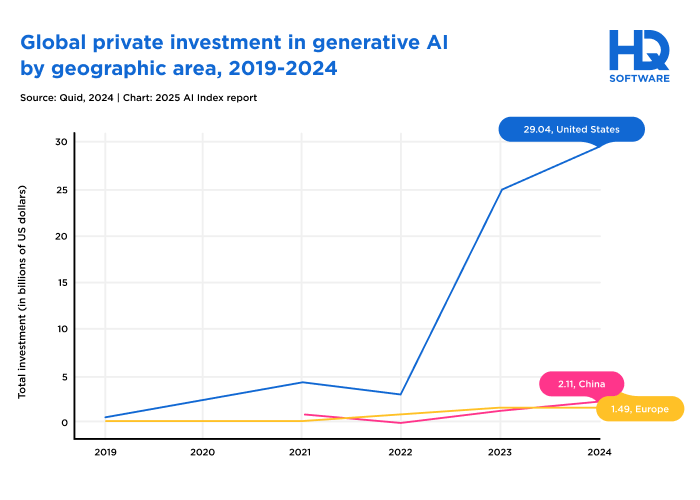
In the next year, generative AI will go beyond highly specialized applications and enter everyday life even more. This will include voice synthesis, creating realistic videos, making graphics or even building customized software.
In addition, the entertainment, marketing and education industries will increasingly use these technologies to create personalized content. This means that more people will have the ability to easily create complex visualizations, content or data models. Thus, the widespread application of generative AI to solve creative tasks remains one of the key AI trends in 2026.

Wondering how companies successfully implement AI solutions?
Explore Hymux Technologies’s case studies to see how businesses across industries use AI to optimize processes and unlock new opportunities.
In 2026, business process automation trends will focus on the deep integration of Artificial Intelligence and Machine Learning into enterprise systems. These technologies not only offer automation of routine tasks but also help companies rethink their approach to business, marketing and sales management based on deep data analysis.
So what are the key aspects of AI-powered automation? Let’s look at some of them.
Edge AI is expected to be one of the fastest growing AI trends by 2026. Unlike traditional cloud-based AI, Edge AI processes data directly on devices, enabling faster decision-making and reduced latency. This method not only provides valuable information in real time, but also improves privacy by reducing the need to transfer sensitive information to cloud servers.
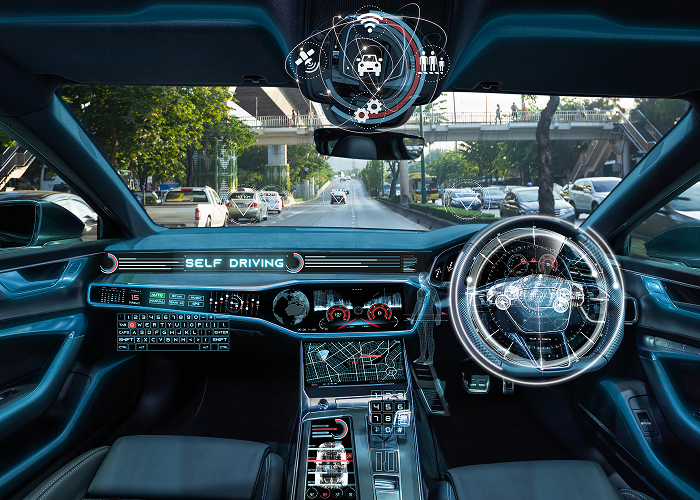
Some of the most common use cases for Edge AI include self-driving cars, autonomous drones, facial recognition, digital assistants, smart home devices and Internet of Things (IoT) networks.
Self-driving cars present one of the most relevant use cases for Edge AI. These cars need to constantly scan their environment and assess the situation, making adjustments to their trajectory based on nearby events. Real-time data processing is crucial for these cases, so their Edge AI on-board systems are responsible for storing, processing and analyzing the data.
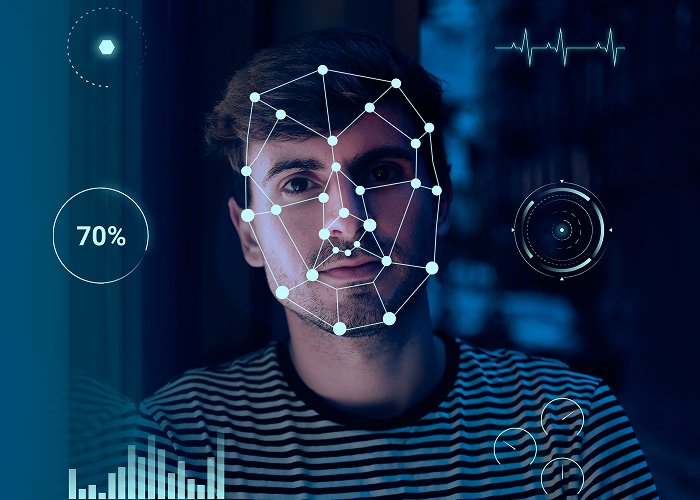
Another use case for Edge AI is facial recognition systems. They rely on computer vision algorithms to analyze data collected by the camera. Facial recognition applications for tasks such as security need to work reliably, even if they are not connected to the cloud.
Both AI and ML can automate tasks, analyze vast amounts of data, detect anomalies and adapt to threats in real time. All of this makes them increasingly necessary for cybersecurity professionals.
In 2026, Artificial Intelligence will become a common and vast part of cybersecurity. Here are some of the changes we see in the future:

Unsure how to turn AI trends into real business value?
Hymux Technologies helps companies transform emerging AI technologies into practical solutions that automate workflows and improve decision-making.
Victoria Rokash
Business Development Manager
Traditional AI models typically process one type of data at a time. This can be images, text, audio, or sensor data. In contrast, multimodal AI systems can process, understand, and generate results using multiple types of data simultaneously. By integrating different data sources, these systems provide a more comprehensive and context-aware understanding of information.
Multimodal AI is expected to develop significantly in 2026. The integration of different data modalities will expand the capabilities of AI systems, allowing them to process and interpret complex information more efficiently.
Key trends include:
One of the key trends in AI development in 2026 is an increased focus on ethics. As Artificial Intelligence becomes more powerful and integrated into various areas of society, there is a need to ensure that it functions in an ethical, transparent and unbiased way. This is where the issue of Ethical AI comes to the fore.
In 2026, we can expect to see an increase in the number of initiatives to develop AI systems that respect privacy, reduce inherent biases, and operate according to ethical principles that prioritize human interests. In addition, AI’s role in decision-making will be subject to greater scrutiny, requiring developers to ensure AI models are transparent and provide explainable results.
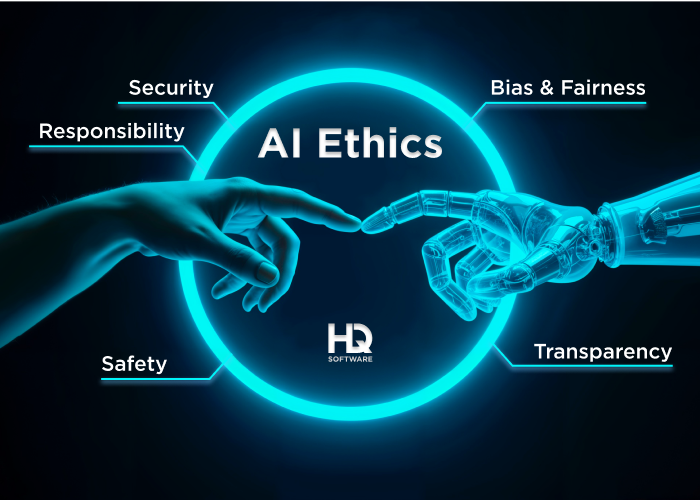
As for Explainable AI, it is Artificial Intelligence that can “explain” how it made a particular decision. This is especially important when AI is used in fields such as medicine, finance or courts, where people’s fates are at stake. In 2026, there is an increasing focus on making AI transparent and understandable.
For example, if Artificial Intelligence helps a doctor make a diagnosis, it’s important that the doctor understands what that diagnosis is based on — symptoms, tests, or medical history. This allows the result to be verified and a more informed decision to be made, rather than just “trusting the machine.” This approach helps people trust technology more and use it more safely and honestly.
Many experts believe that 2026 could be the year of robotics. Artificial Intelligence is undoubtedly at the center of the new robotics boom.
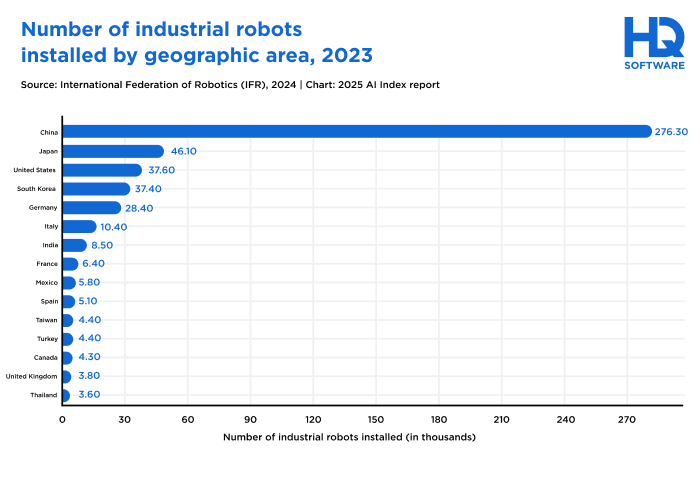
With the help of modern algorithms and large amounts of data that can be processed in a very short time, robots can learn to solve new tasks. This happens through Machine Learning, Deep Learning and sophisticated neural networks, which to a certain extent teach the robot to see, understand and act independently. This opens up unimaginable opportunities for companies across a wide range of industries.
For example, in the manufacturing industry, robots can improve their accuracy, handle more complex components, and even reconfigure themselves to meet different production needs. Artificial Intelligence forms an important interface here: instead of reprogramming robots for each variant of a production process, in the future they will be controlled via a central “brain” that analyzes both states and process sequences and optimizes them in real time.
| AI trends | Description |
| Conversational AI and advanced chatbots | In 2026, companies across industries will actively use Сonversational AI to create chatbots that can engage in meaningful conversations, handle complex queries, and personalize the user experience. Such chatbots will be used in help desks, digital assistants, and learning applications. |
| Voice recognition and voice commands | Modern applications in 2026 will actively support voice commands, thanks to improved voice recognition algorithms. Users will be able to perform actions, control interfaces and receive responses without touching anything. This is especially important for smart homes, cars, and mobile devices. |
| Automated testing and quality assurance | In 2026, Artificial Intelligence will play a key role in quality assurance. Machine Learning systems will be able to automatically generate tests, identify vulnerabilities, analyze code behavior, and predict bugs. This will help reduce the cost of manual testing and significantly speed up the app development process. |
| Emotion recognition and sentiment analysis | Apps will start to actively use AI to recognize users’ emotions based on text, voice or image. This data will be used in learning, healthcare, marketing and customer service applications to customize content, improve the user experience and increase engagement. |
| Enhanced security and fraud detection | Security systems in 2026 will rely on AI that can analyze behavioral patterns, network interactions and transactions in real time. This will make it possible to quickly identify suspicious activity, block fraudulent transactions and adapt to new types of threats. |
In 2026, Artificial Intelligence is predicted to significantly change many industries, increasing efficiency, automation, and innovation. Many of these changes are already underway, but their impact will become more tangible in the coming years. Let’s take a look at how AI could change key sectors in 2026.
In 2026, Artificial Intelligence is becoming a key tool in healthcare, transforming workflows and reducing administrative burdens. Using fundamental models and other AI tools, the industry is moving to improved diagnostics, personalized medicine and operational efficiency.
Many medical facilities have already implemented Artificial Intelligence into their workflows and experienced its obvious benefits. One of our US customers also approached the Hymux Technologies team with the idea of creating an AI chatbot that would make the patient journey easier and more comfortable.
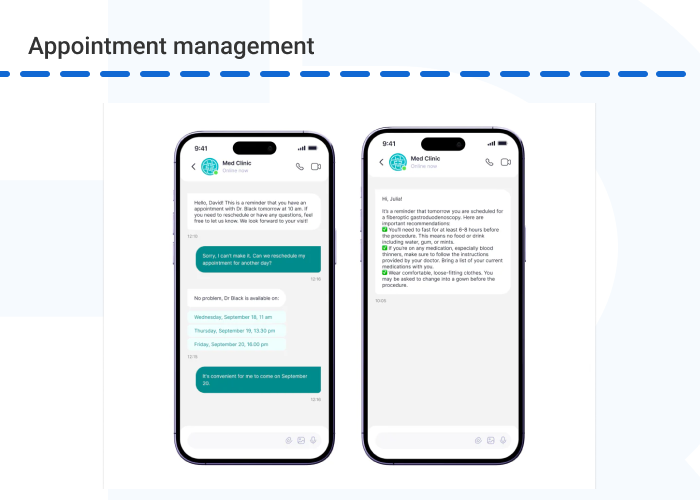
We enthusiastically implemented this project and achieved impressive results:
AI in manufacturing will change processes, supply chains and equipment maintenance.
The Hymux Technologies team, together with our customers, closely follows the latest AI trends in manufacturing and strives to keep up with the times. One of the brightest examples is a project realized for a client from the USA. As a result of productive cooperation, an advanced Machine Learning algorithm was developed. It monitors equipment operation in real time and predicts possible malfunctions, allowing it to eliminate them in time.
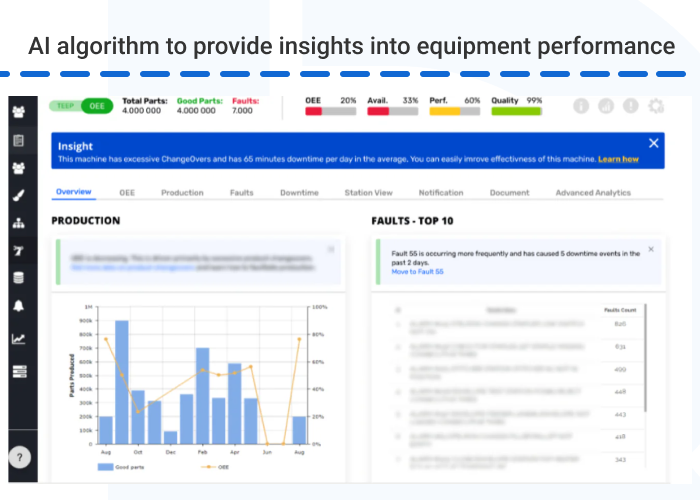
This solution enabled the customer to reduce equipment downtime by 63.8%. It is worth noting that this was identified as a key objective at the start of the project, and it was successfully achieved.
Autonomous technology and AI in logistics will change how people and goods move.
AI will take a key role in the financial sector, improving processes and customer interactions.
Artificial Intelligence is increasingly being applied to sustainability issues, helping to tackle global challenges such as climate change, resource scarcity and environmental protection.

Finding it difficult to integrate AI into your existing systems?
Our engineers design scalable AI solutions that seamlessly integrate with your current infrastructure and business processes.
Dmitry Tihonovich
Business Development Manager
Many of our clients have already implemented AI solutions into their business processes and have seen their effectiveness firsthand. We are proud to be part of successful projects in industries such as healthcare, manufacturing and marketing.
The Hymux Technologies team is constantly monitoring new trends and technological advances in AI, which is already transforming businesses and the lives of people around the world.
If you are thinking about how Artificial Intelligence can help your business, contact us for a consultation. We will thoroughly analyze your challenges and propose solutions that will increase efficiency, optimize processes and increase profits.

Lead Software Engineer
An experienced developer with a passion for IoT. Having participated in more than 20 Internet of Things projects, shares tips and tricks on connected software development.


Subscribe for more!
We are open to seeing your business needs and determining the best solution. Complete this form, and receive a free personalized proposal from your dedicated manager.

Sergei Vardomatski
Founder