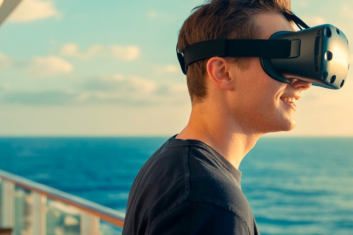
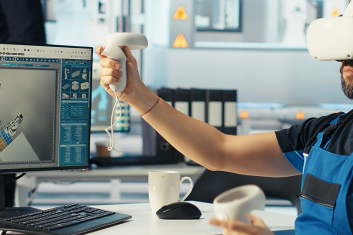
Imagine your students exploring a volcanic crater, diving deep underground in search of precious stones, or strolling through the jungle observing rare species of flora and fauna. All without leaving the classroom. Virtual Reality field trips make this possible.
VR field trips allow students and teachers to embark on interactive journeys around the world, combining exciting experiences with educational value. This is not just an alternative to traditional lessons but a tool that can broaden the horizons of learning and engage kids on a new level. In this article, we will take a detailed look at how educators can use virtual field trips to enrich the learning process.
A virtual field trip (VFT) is an innovative learning format that allows students and schoolchildren to travel the world without leaving the classroom. With the help of Virtual Reality technologies, students are immersed in interactive environments that create the effect of real presence.
Unlike traditional videos or illustrations, a VR field trip allows students to look around 360°, zoom in on objects, and examine the details of architecture, sculptures, or plants from all angles. Realistic sound and visual effects enhance the experience, making the process exciting and memorable.
It is important to understand that virtual field trips for kids can be based on a variety of media formats, from conventional videos and 360° images to live broadcasts and fully immersive VR technologies. This approach makes VFT an interactive and modern alternative to traditional in-person tours.
Benefits of Virtual Reality Field Trips
Virtual Reality field trips change the very perception of the learning process. Instead of static lessons, students get a lively, dynamic, and emotionally rich journey. Learning becomes an exciting adventure that engages attention, senses, and imagination. Let’s take a look at the main advantages of VR field trips for teachers and students.
For Students
Access to unique places: Students can “visit” museums, science labs, historical monuments, or nature reserves that are difficult or impossible to visit in real life.
Sense of presence: Immersive environments allow learners to feel as if they are inside the events. Historical scenes, natural phenomena, and museum exhibits come to life, evoking an emotional response.
Improved knowledge retention: The material is absorbed not through memorization, but through experience and impressions, which makes the knowledge more lasting.
Variety of learning formats: Interaction with 360° content, sounds, and 3D objects helps students remember information better and develops critical thinking skills.
Inclusivity: Virtual Reality field trips open up opportunities for students with different needs. Children with limited mobility or special health conditions can “visit” museums, nature reserves, and even space—without physical barriers.
For Teachers
Flexibility and accessibility: Many virtual field trips for students are free or significantly cheaper than traditional trips and can be accessed from virtually anywhere in the world.
Support for educational goals: VFT can be integrated into lessons on history, geography, biology, art, and other subjects, making the material more visual.
Saving time and resources: Virtual Reality field trips do not require transportation, complex organization, or unnecessary expenses. This means they are accessible to schools with any budget.
Increasing student motivation: New technologies make the learning process more modern and attract the attention of even those students who are difficult to engage with traditional methods.
Subject-Specific Ideas for Virtual Field Trips
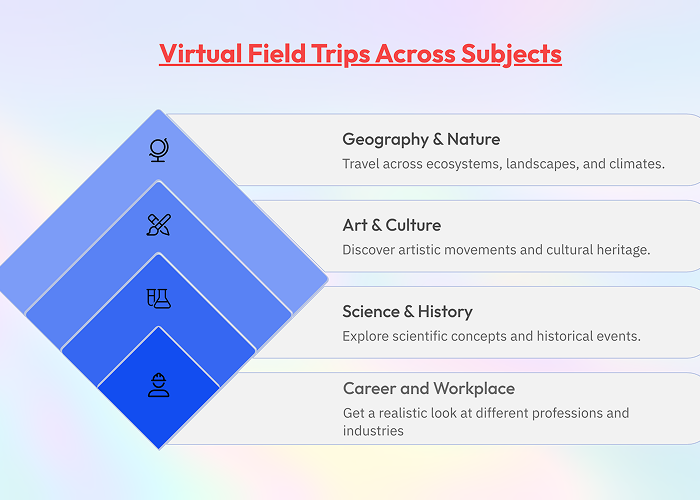
Virtual Reality field trips can be easily adapted to any subject or discipline. Here are just a few areas where this innovative learning format can be particularly effective in your program.
Science
Virtual field trips provide unique opportunities to explore scientific concepts interactively. Students can enter a virtual laboratory, conduct experiments, or observe physical and chemical processes up close. They can study the structure of the atom, travel inside the human body to examine organs and systems, or explore the solar system in 3D. This hands-on, immersive approach makes abstract theories tangible and easier to understand.
History
Historical events come to life right before the students’ eyes. Instead of boring dates and names, they take a visual journey into the past. Students can not only read about the Colosseum or the pyramids but also walk through them, peek inside, and feel the atmosphere of bygone eras. Notre-Dame de Paris, the Acropolis of Athens, the Berlin Wall—all of these become accessible anywhere through interactive virtual field trips.
Art and Culture
VR field trips allow students to examine works of art in minute detail, right down to the brushstrokes on the canvas. VR exhibitions transport students to world-class galleries, where they can study painting, sculpture, and architecture from different styles and eras. VR lessons give them the opportunity to “immerse” themselves in a work of art and truly experience its aesthetics.
Need a custom software solution? We’re ready to help!
Hymux Technologies has a team of skilled professionals ready to tackle the project. Ask me!
Thanks to VR field trips, exploring nature has become easier and safer. Now students can find themselves in the Amazon jungle, at the bottom of the ocean, or on the edge of a volcano crater without risking their safety. Virtual Reality field trips are ideal for studying ecosystems, climate, geological processes, and the diversity of flora and fauna on the planet. Lively, visual material helps students better understand complex topics and generates genuine interest.
Career and Workplace
VR field trips can also prepare students for future careers. They can “visit” workplaces and industries that are otherwise inaccessible, such as a hospital operating room, an engineering plant, or a film studio. These experiences give learners a realistic view of various professions, help them explore career paths, and develop an early understanding of workplace expectations.
Top 7 Platforms for VR Field Trips in 2025
Today, educators can choose from a wide range of tools that make immersive learning both accessible and engaging. Below are seven of the best platforms in 2025, each offering unique opportunities for teachers and students.
1. Google Arts & Culture
Google Arts & Culture provides access to more than 2,000 museums, galleries, and cultural institutions around the world. The platform offers virtual field trips of famous museums, historical monuments, and natural sites. Teachers can use these resources to teach art, history, and culture lessons, allowing students to “visit” places they are unlikely to see in real life. The platform also provides tools for creating your own VR field trips and educational materials.
2. Nearpod
Nearpod is an interactive educational platform that allows teachers to create lessons using virtual tours. The platform offers more than 265 VR lessons covering various topics and disciplines. Teachers can integrate VR field trips into their lessons, making learning more engaging and interactive. The platform also provides tools for assessing and analyzing student performance.
3. ExpeditionsPro/ClassVR
ExpeditionsPro and ClassVR provide ready-made VR field trips that teachers can use in the classroom. The platforms offer thousands of interactive virtual experiences on various topics, including science, art, and history. Teachers can conduct Virtual Reality field trips without the need for additional devices or complex setup, making learning more effective and accessible. The platforms also offer tools for creating your own VR lessons and materials.
4. Discovery Education
Discovery Education is primarily focused on schools and offers ready-made educational materials. Here, virtual field trips are integrated into the learning process: they are accompanied by lesson plans, assignments, and discussion questions. A distinctive feature of the platform is the availability of video lessons, 3D resources, and thematic modules created in collaboration with experts and educators. This makes it particularly convenient for systematic use in school curricula.
5. Smithsonian Learning Lab
Smithsonian Learning Lab provides access to the Smithsonian Institution’s rich museum collections. Teachers and students can independently compile selections of exhibits, creating their own “virtual exhibitions” for lessons. The platform features a huge archive of artifacts, photographs, documents, and video materials, making it ideal for research and creative assignments where students become not just viewers but curators.
6. Google Earth & Voyager
Google Earth & Voyager focus on exploring geography and the world around us. These are not so much museum tours as opportunities to immerse yourself in maps, 3D models of cities, natural objects, and cultural attractions. Teachers can use Voyager’s ready-made educational routes, such as those on the history of civilizations or climate change, as well as create their own tours in Google Earth. This platform is especially valuable for geography, ecology, and interdisciplinary projects.
7. YouTube 360/Live Cams
YouTube 360° and Live Cams provide access to live streams and 360-degree videos that can be used for virtual field trips. Teachers can use these resources to teach lessons on various topics, allowing students to “visit” different places and events in real time. The platform also provides tools for creating your own videos and educational materials. Teachers can create personalized lessons using YouTube 360° and Live Cams resources and share them with colleagues.
YouTube 360° has democratized access to interactive virtual field trips by eliminating the need for special equipment. All you need is a smartphone and a cardboard holder. Thousands of panoramic videos allow you to take online tours around the world.
Custom VR Software With Hymux Technologies
Hymux Technologies is a team of experts devoted to developing VR solutions for education and business. We help schools, universities, and corporate clients create unique virtual field trips and training programs that make the learning process truly exciting. Our strength lies in our ability to combine Virtual Reality technologies with educational goals, turning ideas into working projects.
Stages of development for VR solutions:
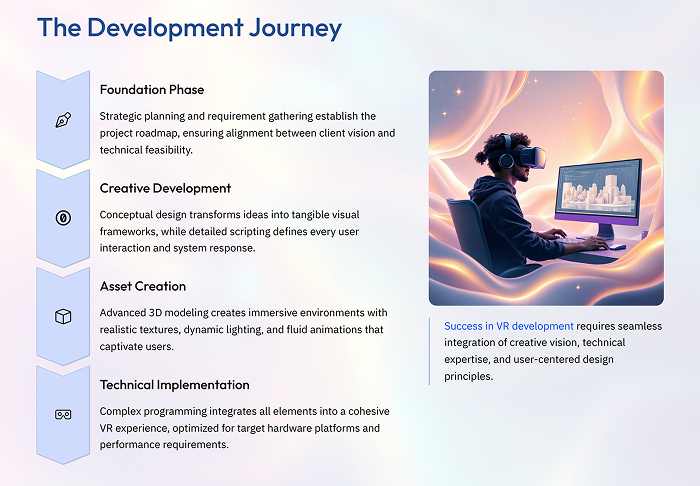
Analysis and consultation: We begin by discussing your goals and objectives. In this initial phase, we work together to determine the format of virtual field trips or educational content that is most suitable for you and how best to integrate VR into the learning process.
Design and script: After gathering requirements, our team helps you develop a concept and educational script. We create a roadmap for the future VR solution: which locations will be used, which features will be added, and which interactive elements will bring the learning process to life.
Design and modeling: Our specialists develop 3D models and create visual and sound effects that immerse users in a realistic environment. We pay attention to detail so that students feel fully present.
Development and integration: Programmers create functionality, from simple viewing to complex interactive features such as tests, assignments, and interaction with objects. We also integrate the solution into the existing educational system so that it is easy for teachers and students to use.
Testing and improvement: We thoroughly test the product to ensure that it works stably, safely, and conveniently for users. If necessary, we refine and improve it to suit your needs.
Launch and support: After launch, we continue to support the project: we help with updates, adding new features, and technical support. This ensures that your VR solution will remain relevant and effective in the long term.
Considering custom software?
Hymux Technologies’s team of experts can design and develop the perfect solution for your business. Let’s discuss it
Planning a virtual field trip may seem easier than organizing a traditional one, but it still requires structure. A well-prepared trip ensures that students stay engaged and achieve clear learning outcomes. Here are the key steps:
Define the learning goal: Decide what you want students to learn. Is it history, science, or cultural awareness? Clear objectives will guide your choice of platform and content.
Consider a custom solution: Sometimes ready-made platforms are not enough to meet unique educational needs. In this case, a custom VR field trip can be developed to match specific goals, curriculum standards, or student age groups. Working with experts like Hymux Technologies ensures that the solution is tailored, flexible, and scalable.
Prepare students in advance: Supply background information, set expectations, and explain how the Virtual Reality field trip will work. A short introduction helps students focus during the experience.
Add interactive elements: Keep students engaged with guiding questions, worksheets, or small group discussions. Encourage them to observe, take notes, and share discoveries.
Facilitate during the trip: Don’t just play the VR content; guide the students through it. Pause to discuss important points or ask quick questions to keep attention alive.
Reflect and extend learning: After the trip, review what students learned. This could be a short essay, presentation, or classroom debate. Reflection helps transform the interactive virtual experience into lasting knowledge.
Ready to Bring Virtual Field Trips to Life?
VR field trips open up endless possibilities for schools and universities, from studying culture and science to preparing for future careers. But to make the experience truly high-quality and useful, it is important to have a reliable technology partner.
Hymux Technologies develops VR solutions that help teachers and students learn in an engaging and effective way. We create custom VR projects — from the idea and script to the finished educational platform.
Contact us today to discuss how we can help you turn virtual tours into a real learning tool.
References
National Library of Medicine – Benefits of Taking a Virtual Field Trip in Immersive Virtual Reality: Evidence for the Immersion Principle in Multimedia Learning https://pmc.ncbi.nlm.nih.gov/articles/PMC9023331/
A developer with extensive expertise in AR/VR, very ingrained into the topic of Mixed Reality development. Shares his knowledge and the results of many years of work.
Yes, many virtual field trips are free. Platforms like Google Arts & Culture, YouTube 360, and Smithsonian Learning Lab offer a wide range of content without cost. Teachers can use them to enrich lessons, making exploration accessible for all students, regardless of budget.
What Equipment Do I Need?
At the simplest level, only a computer, laptop, or tablet with internet access is enough to participate in a Virtual Reality field trip. For a more immersive experience, schools can use VR headsets ranging from basic models to advanced devices. High-quality headphones and a stable internet connection improve sound, visuals, and overall student engagement.
What Are the Best VR Options for Kids?
The best VR options for children must be safe, age-appropriate, and easy to manage in a classroom or at home. Platforms such as Nearpod VR, ExpeditionsPro, and Discovery Education provide carefully curated educational content. For hardware, lightweight headsets that pair with smartphones are usually sufficient, keeping the focus on fun, learning, and simple interaction.
How Do I Keep Students Engaged Online?
To keep students engaged, combine virtual field trips with active tasks. Ask them to take notes, answer guiding questions, or discuss observations afterward. Keep sessions short and focused, while encouraging interaction. When students feel involved in the journey, they stay motivated and curious.
We are open to seeing your business needs and determining the best solution. Complete this form, and receive a free personalized proposal from your dedicated manager.